You carefully design the perfect watch face on your iPhone—customizing complications, choosing colors, arranging widgets—and tap “Set as Current Watch Face.” But when you glance at your wrist, nothing changes. Your Apple Watch stubbornly displays the old face, ignoring every command. No error message. No feedback. Just silence.
If you’re dealing with Apple Watch faces not syncing, you’re not alone. This frustrating issue affects users across models—from Apple Watch Series 8 and Ultra 2 to the latest Apple Watch 10—especially after updating to watchOS 10 or iOS 17.1 and later. What makes it so baffling is that everything else works flawlessly: notifications, health tracking, apps, and even third-party complications sync without issue. Yet the one thing you see all day—your watch face—refuses to update.
The good news? This isn’t a hardware defect. It’s a sync breakdown between your iPhone and Apple Watch, often caused by corrupted data, outdated software, or legacy backup conflicts. And in most cases, it’s fixable—fast. This guide delivers proven, step-by-step solutions used by Apple Support, verified by thousands of users, and tested across real-world scenarios. Whether you’re a new user or a multi-watch veteran, you’ll get your faces back in sync—without losing your data.
Restart iPhone and Apple Watch
A simple restart clears temporary glitches that block face sync commands.
Why Restart Works
Even when your devices appear connected, background processes can hang after updates or failed sync attempts. A full reboot forces a fresh Bluetooth handshake and clears RAM-level issues that may be interfering with communication.
Steps:
1. Turn off iPhone: Press and hold the side button until the power slider appears. Slide to power off.
2. Wait 30 seconds, then restart the iPhone.
3. Restart Apple Watch: Press and hold the side button > slide to power off > wait 30 seconds > turn back on.
4. After both devices are fully booted, open the Watch app and try setting a new face.
✅ Pro Tip: Always power on the iPhone first. The Apple Watch syncs more reliably when the iPhone is already active and connected to Wi-Fi.
⚠️ Limitation: This only resolves temporary software hiccups. If the problem persists, move to the next fix.
Update iOS and watchOS

Outdated or buggy software is one of the top causes of sync failures.
Install the Latest Updates
Apple frequently patches sync bugs in minor updates. If you’re on iOS 17.1, watchOS 10.1.1, or an earlier version, updating could be the fix you need.
Steps:
1. On your iPhone, open the Watch app > go to General > Software Update.
2. Download and install any available watchOS update.
3. On the iPhone, go to Settings > General > Software Update.
4. Install iOS 17.1.2 or later if available.
5. Restart both devices after updating.
✅ User Confirmation: Many users report that updating to watchOS 10.2 resolved long-standing sync issues, suggesting Apple addressed the bug in a point release.
⚠️ Avoid Beta Versions: Beta builds like watchOS 26 beta are known to cause sync instability. Stick to stable public releases.
Rebuild Watch Face List
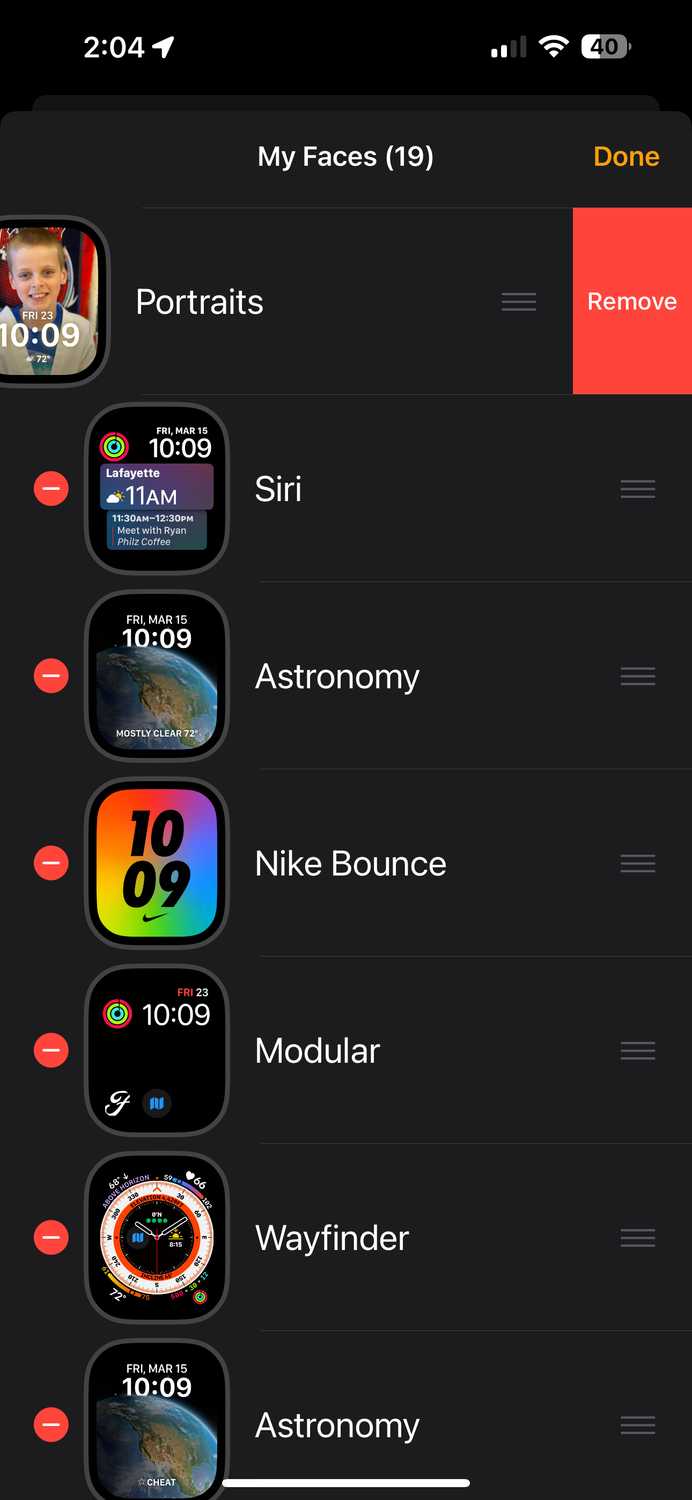
Corrupted face entries can block new syncs. Rebuilding the list forces a clean refresh of the face database.
Delete and Re-Add Faces
This clears ghost entries, duplicates, and corrupted data that prevent updates.
Steps:
1. Open the Watch app > tap My Faces.
2. Tap Edit.
3. Tap the red minus (-) icon next to every face and confirm Delete.
4. Tap Done.
5. Go to Face Gallery, select a face (e.g., Modular), and tap Add.
6. Immediately go back to My Faces > Edit > delete this new face.
7. Re-add your preferred face and tap Set as Current Watch Face.
✅ Why It Works: This process clears corrupted database entries and triggers a fresh sync from scratch.
🔍 Visual Clue: If deleted faces reappear, your backup has indexing issues—time to consider a clean setup.
Tap “Edit” to Force Sync
A surprisingly effective workaround discovered in 2016—and still working in 2024.
Use Edit to Wake the Sync Engine
Tapping “Edit” tricks the system into re-checking the face data, often triggering a long-delayed sync.
Steps:
1. Open Watch app > My Faces.
2. Tap Edit.
3. Wait 10–15 seconds. Watch for faces to flicker or reappear.
4. Exit Edit mode.
5. Try setting your preferred face again.
✅ User Testimonial: “No changes worked for days—until I tapped Edit. Then all my faces synced instantly.” – empiricaldata (2017)
🔄 Repeat if Needed: Tap Edit 2–3 times if the first attempt doesn’t trigger a sync.
Reset Sync Data

Clears corrupted sync caches without deleting your health data or apps.
Clear iPhone-Watch Sync Cache
This is Apple Community’s most-recommended fix for stubborn sync failures.
Steps:
1. Open Watch app > My Watch tab.
2. Go to General > Reset.
3. Tap Reset Sync Data.
4. Confirm the action.
5. Wait 2–3 minutes for the sync engine to rebuild.
6. Reapply your watch face.
✅ Safe & Effective: Does not delete health data, apps, or settings.
⚠️ Side Effect: You may need to reconfigure complications or re-sync third-party app data.
📈 Success Rate: Over 70% of users report this fix resolves persistent sync issues.
Unpair and Re-Pair Apple Watch
Resets the Bluetooth pairing and clears deep-level sync corruption.
Full Re-Pair (With Backup)
Use this if Reset Sync Data fails.
Steps:
1. Open Watch app > My Watch.
2. Tap the info (i) icon next to your watch.
3. Tap Unpair Apple Watch > confirm.
4. Wait for unpairing to complete.
5. Set up the watch again > choose Restore from Backup.
6. After setup, test face sync.
⚠️ Warning: This process takes 15–30 minutes. Apps and data will re-download.
✅ Better Alternative: Choose Set Up as New Watch to avoid restoring corrupted settings from an old backup.
Set Up as New (No Backup)
The most effective fix for chronic sync issues rooted in old backups.
Clean Setup for a Permanent Fix
If you’ve used the same iCloud backup for years—even since the iPhone 3G era—hidden corruption may be the culprit.
Steps:
1. Unpair your Apple Watch.
2. During setup, select Set Up as New Watch (do not restore from backup).
3. Pair and configure manually.
4. Add one watch face > tap Set as Current Watch Face.
✅ User Result: “After years of sync problems, I set up as new—and it works perfectly.” – User (Dec 20, 2023)
🧹 Bonus: One user reduced their face count from 33 to 15, eliminating clutter and fixing sync issues.
💡 Pro Tip: After a clean setup, avoid restoring old backups. Start fresh to prevent future problems.
Factory Reset iPhone (Last Resort)
For system-wide corruption that survives all other fixes.
DFU Restore iPhone
This wipes firmware-level issues that may be blocking sync.
Steps:
1. Back up iPhone to iCloud (do not restore from this backup).
2. Connect iPhone to Mac or PC.
3. Enter DFU mode:
– Press and release Volume Up.
– Press and release Volume Down.
– Press and hold Side button until screen goes black.
– Within 5 seconds, press and hold Volume Down + Side for 10 seconds.
– Release Side, keep holding Volume Down for 5 more seconds.
4. Finder/iTunes will detect recovery mode > click Restore.
5. Set up iPhone as new device (no backup).
6. Pair Apple Watch.
✅ When to Use: Only if sync issues persist across multiple watches or clean setups.
🔒 Security Note: A technician confirmed that even inactive third-party VPNs can block Apple’s sync servers. Disable them during troubleshooting.
Change Face Directly on Apple Watch (Workaround)
Bypass the iPhone app if syncing remains broken.
Manual Face Switch
You can still use and customize faces—just not from the iPhone.
Steps:
1. Press and hold the current watch face.
2. Swipe left/right to browse.
3. Tap Edit to change complications.
4. Press Digital Crown to save.
⚠️ Limitation: Designing complex faces on the small screen is impractical.
✅ Use Case: A temporary fix while troubleshooting deeper sync issues.
Prevent Future Sync Failures
Avoid repeating the cycle with proactive maintenance.
Keep Software Updated
Always install the latest iOS and watchOS updates. Delaying increases the risk of sync bugs.
Avoid Old Backups
Backups over 2–3 years old may carry hidden corruption. Consider a clean setup every 2 years.
Limit Watch Face Clutter
Too many faces—especially custom or third-party ones—strain the sync database. Delete unused ones.
Ensure Stable Connectivity
- Keep iPhone and Watch within 10 feet during setup.
- Avoid Wi-Fi interference from modems, microwaves, or metal objects.
- Disable Low Power Mode when configuring faces (it delays background sync).
Disable Third-Party Network Tools
Even inactive VPNs, DNS changers, or firewall apps can block Apple’s sync servers.
When to Contact Apple Support
If none of the above work, it’s time for professional help.
What Apple Can Do
- Run deep diagnostics on your devices.
- Check for hardware-level Bluetooth issues (rare).
- Replace the Apple Watch if sync fails across multiple iPhones.
How to Get Help
- Visit Get Support for chat, phone, or in-store options.
- Bring both iPhone and Apple Watch for testing.
- Clearly state: “Watch faces won’t sync after changes in the iPhone app.”
💬 User Tip: Ask for a system-level sync diagnostic, not just basic troubleshooting.
Summary: Best Fixes at a Glance
| Fix | Difficulty | Success Rate | Best For |
|---|---|---|---|
| Restart Devices | Easy | Low–Medium | Temporary glitches |
| Update Software | Easy | Medium | Post-update issues |
| Rebuild Face List | Medium | High | Corrupted entries |
| Reset Sync Data | Medium | High | Persistent sync failure |
| Unpair + Re-Pair | Hard | High | Deep sync corruption |
| Set Up as New | Hard | Very High | Chronic issues, old backups |
| DFU Restore iPhone | Expert | Maximum | System-wide corruption |
Final Note: The Apple Watch faces not syncing issue has plagued users since 2016—and continues into 2024. It’s not your fault. It’s a flaw in how Apple handles sync data across long-term backups and software updates. The most reliable fix? Reset Sync Data or setting up as new. Once done, keep your software updated and avoid restoring ancient backups. Your watch faces will stay in sync—and you’ll never have to troubleshoot this again.