If your Apple Watch just alerted you to an unusually high heart rate while sitting at your desk, you’re probably wondering: Can I trust this? You’re not alone. Millions rely on the Apple Watch heart rate monitor for fitness tracking, sleep analysis, and even life-saving health alerts—but how accurate is it really? The answer isn’t a simple yes or no. Backed by FDA clearance, peer-reviewed studies, and real-world data from over 430,000 participants, the Apple Watch delivers highly reliable heart rate readings in most everyday scenarios—especially at rest and during steady exercise. However, accuracy dips during high-motion activities like weightlifting or intense interval training, and performance can vary based on skin tone, device fit, and environmental conditions.
Unlike basic fitness trackers, the Apple Watch uses advanced optical sensors and, in Series 4 and later models, a medical-grade ECG sensor. This allows it to not only track beats per minute but also detect dangerous arrhythmias like atrial fibrillation (AFib). Research shows its resting heart rate readings are within ±7 BPM of clinical ECGs, and its ECG app has helped users discover undiagnosed heart conditions. Yet, it’s not flawless. During rapid heart rate changes or in extreme conditions like cold weather or dehydration, signal interference can lead to temporary inaccuracies. Plus, while its PPG-based heart rate data is excellent for personal use, it should never replace professional medical diagnosis.
In this detailed breakdown, we’ll examine exactly how accurate the Apple Watch heart rate monitor is—by activity type, health condition, and population—using clinical studies, user reports, and technical insights.
How the Apple Watch Measures Your Heart Rate
Optical Sensors: The Science Behind PPG
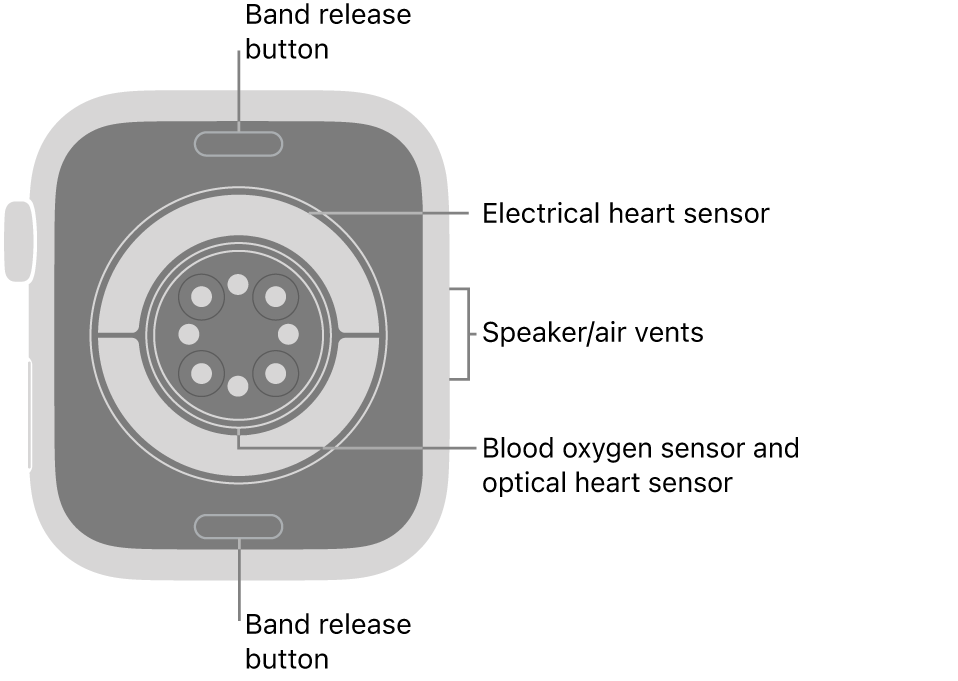
The Apple Watch uses photoplethysmography (PPG), a non-invasive method that shines light into your wrist and measures how much reflects back as blood pulses through. Green, infrared, and red LEDs work together to capture accurate data across different conditions:
- Green LEDs (~525 nm): Used during workouts to detect rapid blood flow changes. Most sensitive to motion but highly accurate when the watch is snug.
- Infrared LEDs (850–940 nm): Powers background monitoring when you’re inactive. More energy-efficient and less prone to motion noise.
- Red LEDs (660 nm): Found in Series 6 and later, these support blood oxygen (SpO₂) tracking.
A photodiode array reads the reflected light, calculates inter-beat intervals, and reports your heart rate in real time. This system runs continuously, making it ideal for tracking resting heart rate, recovery, and long-term cardiovascular trends.
ECG Sensor: Detecting Irregular Rhythms
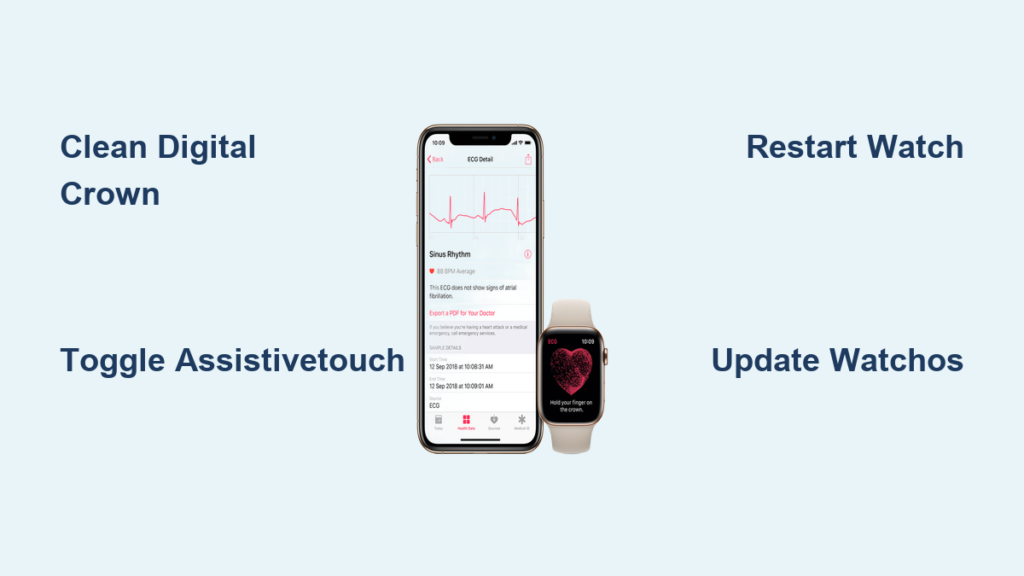
Starting with the Apple Watch Series 4, Apple added an FDA-cleared single-lead ECG sensor. When you press your finger to the Digital Crown, the watch completes an electrical circuit and records your heart’s rhythm over 30 seconds.
- Detects atrial fibrillation (AFib), atrial flutter, and supraventricular tachycardia (SVT)
- Classifies rhythms as sinus, AFib, or inconclusive
- Provides clinical-grade insights when you feel palpitations
Unlike PPG, which infers heart rate from blood flow, ECG measures actual electrical signals—making it far more reliable for diagnosing arrhythmias.
Resting and Daily Use: Where It Excels
Resting Heart Rate Accuracy
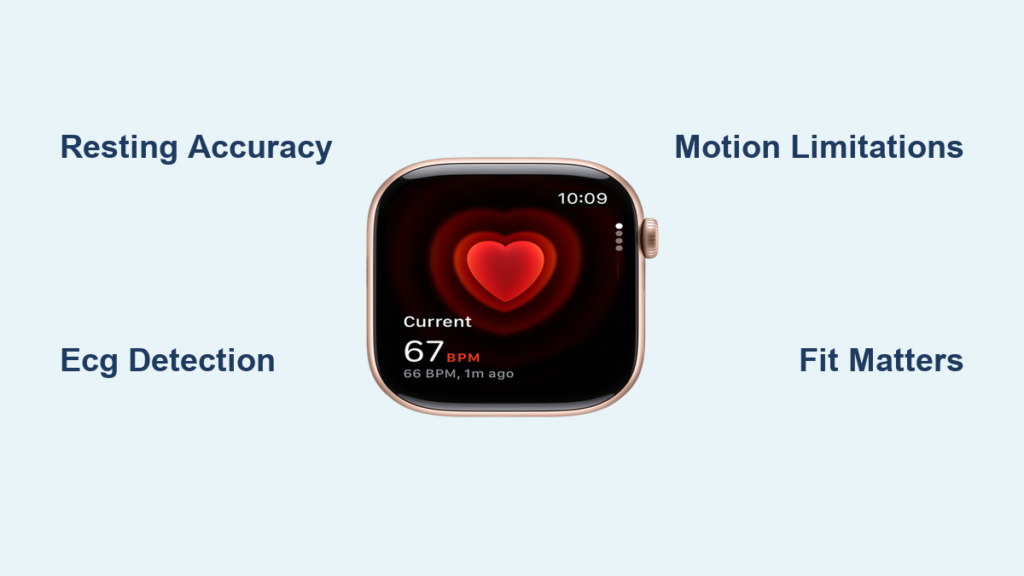
At rest, the Apple Watch is extremely accurate, closely matching hospital-grade ECGs and chest straps.
- A 2026 meta-analysis of 82 studies found a mean bias of just -0.27 BPM
- 95% of readings fell within ±7 BPM of gold-standard measurements
- Bland-Altman analysis showed a mean overestimation of +0.21 BPM, well within clinical limits
This makes the watch ideal for tracking overnight heart rate, sleep quality, and long-term cardiovascular health. Users with bradycardia, hypertension, or stress-related conditions can rely on these readings to spot meaningful trends.
Background Monitoring Reliability
Using infrared LEDs, the watch checks your heart rate every few minutes when you’re still.
- Apple reports 89% of background readings are within 5 BPM of actual values
- Best during low-motion periods like sleeping or sitting
- Helps detect abnormal spikes or drops that could signal illness, fatigue, or stress
For most people, this passive tracking acts as an early warning system—no action required.
Accuracy During Exercise: Strong, But Not Perfect
Steady-State Cardio Performance
During consistent aerobic activities like running, walking, or cycling, the Apple Watch performs exceptionally well.
- Correlation coefficient (r) ranges from 0.98 to 0.99 compared to chest straps
- 87% of readings are within 5 BPM; 95% within 10 BPM
- Mean Absolute Percentage Error (MAPE) stays below 10%, considered excellent for consumer devices
Many users report readings within 1–2 BPM of Garmin or Polar chest straps during indoor cycling or treadmill runs.
Limitations in HIIT and Interval Training
During high-intensity interval training (HIIT), the Apple Watch can lag due to PPG processing delays.
- May miss peak heart rate during short bursts of effort
- Average heart rate over time remains reliable
- Not ideal for athletes needing millisecond-precise recovery data
While not perfect for elite interval training, it still provides valuable feedback for effort management.
Challenges in High-Motion Activities

Weightlifting and Resistance Training
Arm movements and muscle contractions disrupt optical readings.
- Common issues: grayed-out readings or missing data
- Overhead exercises (e.g., pull-ups, shoulder presses) often cause signal loss
- Blood flow changes and sensor displacement reduce accuracy
Pro Tip: Wear the watch snugly, about one finger above the wrist bone. For better results, pair with a chest or armband sensor like the Scosche Rhythm Plus 2.0.
Cycling and Vibration-Prone Sports
Road or trail vibrations can interfere with PPG signals.
- Some users report readings half the actual rate (~160 BPM instead of ~80)
- Others see intermittent dropouts, especially when gripping handlebars tightly
- Performance improves on stationary trainers with stable positioning
Mountain biking shows slightly higher variation than road cycling, but most readings stay within a few BPM of chest straps.
Clinical Validation: Trusted in Medical Settings
Atrial Fibrillation Detection
The Apple Watch plays a growing role in AFib screening, supported by real-world evidence.
- Apple Heart Study led to medical diagnoses and follow-up care
- Meta-analysis of 17 studies (n = 422,654):
- Sensitivity: 79% – catches most true AFib episodes
- Specificity: 91% – very few false alarms
- Positive alerts are likely accurate, making it a strong early detection tool
However, ECG app results are more reliable than PPG-based notifications for rhythm classification.
Cardiac Rehab and Post-Surgery Monitoring
In clinical trials, the Apple Watch has proven effective even in fragile patients.
- Cleveland Clinic pilot (2019): rc = 0.70 between Apple Watch 4 and telemetry
- Accuracy was higher in AFib patients (rc = 0.86) than in normal rhythm
- 2023 observational study (n = 260): ICC = 1.00 across rest and exercise
- Etiwy et al. (n = 80): rc = 0.80 vs. ECG/Polar H7
These findings support its use in cardiac rehabilitation and remote patient monitoring.
Factors That Impact Accuracy
Fit and Placement
Even the best sensor fails if worn incorrectly.
- Wear snugly, one finger above the wrist bone
- Loose bands cause motion artifacts
- Rotate so sensors face inward and maintain contact
Most accuracy issues resolve with tighter fit and clean sensors.
Skin Tone and Tattoos
- Some studies suggest reduced accuracy in darker skin tones due to melanin absorbing light
- A 2023 study found no significant SpO₂ difference (p = 0.498) between light and brown skin
- Wrist tattoos may block or scatter light—try the opposite wrist
- Excessive hair can interfere with sensor contact
More research is needed for Fitzpatrick skin types V–VI.
Environmental and Physiological Influences
- Cold weather: Vasoconstriction weakens PPG signal
- Dehydration: Alters circulation and may skew results
- Edema (swelling): Common post-surgery, degrades performance
- Heat stress: One user reported failure at ~160 BPM in hot conditions
Stay hydrated, keep the watch warm, and clean the sensor regularly.
How It Compares to Other Devices
vs. Chest Straps
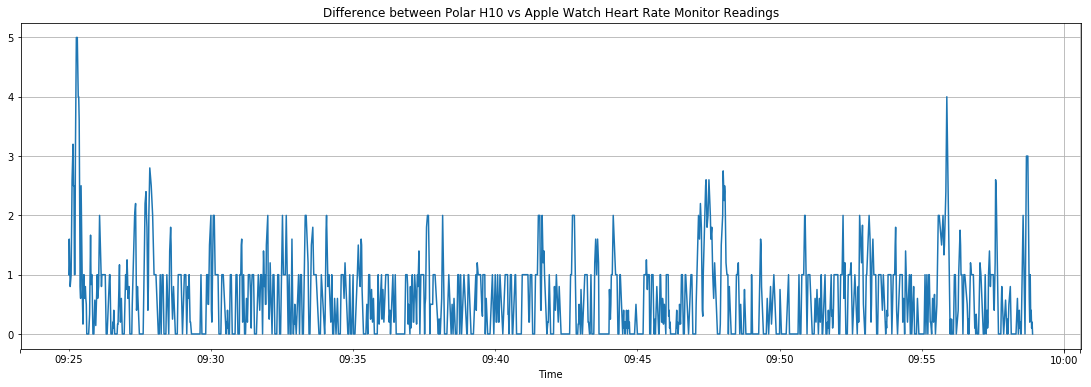
Chest straps like Polar H10 remain the gold standard.
- Direct electrical signal unaffected by arm movement
- Apple Watch is slightly less precise but far more convenient
- Pair them via Bluetooth for best results during training
vs. Other Smartwatches
- Fitbit, Samsung, Garmin: Comparable, but Apple leads in ECG integration
- Whoop Strap: Similar PPG accuracy, weaker in AFib detection
- Gym equipment handles: Often off by 20+ BPM—Apple outperforms them easily
Best Practices for Better Accuracy
- Wear snugly, not loose
- Clean the back sensor regularly
- Moisten skin slightly if readings are unstable
- Use ECG app when feeling palpitations
- Enable Background Heart Rate
- Pair with a chest strap for elite training
- Keep watchOS updated
Final Verdict: Is It Accurate Enough?
The Bottom Line
✅ Resting HR: Within 1–2 BPM of ECG
✅ Steady exercise: 87–98% within 5–10 BPM
✅ AFib screening: FDA-cleared, high specificity
✅ Trend tracking: Excellent for long-term insights
⚠️ HIIT & dynamic motion: Signal lag or dropout
⚠️ Calorie tracking: Highly unreliable (MAPE up to 151%)
⚠️ Extreme environments: Heat, cold, edema affect readings
The Apple Watch heart rate monitor is accurate enough for personal health and fitness tracking. It’s backed by science, trusted in medicine, and capable of detecting life-threatening conditions early. While it doesn’t match chest straps in every scenario, its continuous, accessible, and actionable data makes it one of the most powerful wellness tools available.
For daily fitness, sleep tracking, and early warning alerts, it’s outstanding. For professional athletic training or medical diagnosis, pair it with clinical tools. Used wisely, the Apple Watch doesn’t just track your heart—it helps protect it.