Expert Apple Watch reviews, smartwatch comparisons, and maintenance tips. Find your perfect timepiece with detailed buying guides and care tutorials.

Author: Applewl27 (Page 3 of 4)

Apple Watch 9 Wrist Temperature Not Working: How to Fix


You’ve invested in an Apple Watch Series 9 expecting advanced health tracking—especially nightly wrist temperature monitoring—but instead, you’re greeted with “No Data” or “Needs More Data” in the Health app. You’re not imagining it: many Apple Watch 9 users are experiencing the same frustrating issue, even with perfect sleep tracking and correct settings.

Despite Apple marketing wrist temperature as a key feature for reproductive health and wellness insights, it’s one of the most finicky sensors on the device. The problem isn’t always hardware—it’s usually a mix of undocumented requirements, software bugs, or overlooked settings that silently block data collection.

The good news? Most cases are fixable. This guide delivers a proven, step-by-step troubleshooting plan based on real user experiences, Apple’s technical requirements, and verified fixes. Whether you’re setting up for the first time or your tracking suddenly stopped, you’ll learn how to diagnose, repair, and maintain reliable wrist temperature readings—starting tonight.


Verify Your Apple Watch 9 Actually Supports Wrist Temperature

Before diving into fixes, confirm your device is even capable of wrist temperature tracking.

Only These Models Can Track Wrist Temperature

Apple Watch wrist temperature sensing is exclusive to specific models with the upgraded thermal sensor:

  • ✅ Apple Watch Series 8
  • ✅ Apple Watch Series 9
  • ✅ Apple Watch Ultra
  • ✅ Apple Watch Ultra 2
  • ✅ Apple Watch SE (2nd generation, 2023)

Important: The original Apple Watch SE (2020) and all models before Series 8 do not support wrist temperature, no matter how many updates you install.

If you own a Series 9, you’re good on hardware. But that doesn’t guarantee functionality—software and usage rules are just as critical.

Why This Confusion Happens

Many users assume all recent Apple Watches have this feature. One user, l-sumner, spent days troubleshooting—only to discover their Apple Watch SE (2020) never had the sensor. Don’t waste time fixing what can’t be fixed. If your model is confirmed compatible, move to the next steps.


Meet All 10 Technical Requirements for Wrist Temperature Tracking

Apple Watch wrist temperature requirements checklist infographic

Missing even one condition will stop data collection. Apple doesn’t list all requirements clearly—here’s the full checklist.

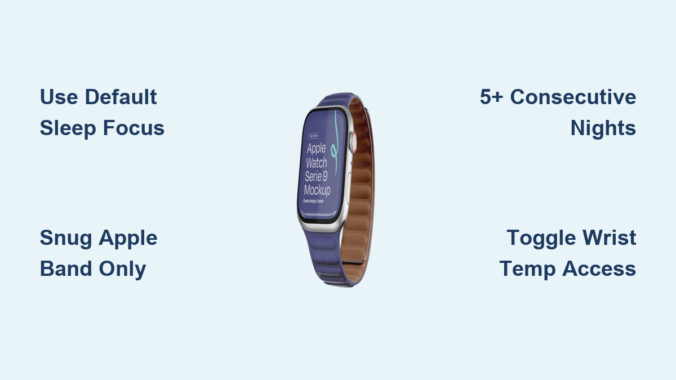
Sleep Focus Must Be Active (Default Version Only)

The sensor only records during Sleep Focus mode—and not just any version. Users report that custom Sleep Focus profiles fail to trigger temperature tracking.

  • On iPhone: Watch app > Focus > Sleep Focus
  • Enable Schedule for automatic activation
  • Use the default Sleep Focus, not a renamed or custom one

    User NickCampbell0089 fixed the issue instantly by switching from “mySleep” to the default Sleep Focus.

Wear the Watch for 5+ Consecutive Nights

Apple needs 5 full nights of sleep data to calculate your personal baseline before showing trends.

  • Expect no data for the first 5 nights—this is normal
  • Missing one night may reset the calibration
  • Be consistent: wear it every night without removal

Wear with a Snug Apple Band

Loose fit breaks skin contact, and third-party bands often block sensors.

  • Tighten the band so the watch doesn’t shift during sleep
  • Use Apple-branded bands (e.g., Sport Band, Solo Loop)
  • Avoid metal, magnetic, or oversized third-party bands
  • Remove screen protectors and cases

    User Gman4d3 regained data after switching back to the original band.

Keep Battery Above 30% Overnight

If the watch dies before morning, no temperature data is saved.

  • Charge to 80%+ before bed if battery drains fast
  • Avoid heavy app use before sleep
  • Enable Power Saving Mode during Sleep Focus (watchOS 11+)

Enable Wrist Detection

This setting tells the watch it’s being worn—critical for sleep and sensor activation.

  • Go to Watch app > Passcode > Wrist Detection = ON
  • Disable only if sharing the watch
  • Turning this off breaks sleep and temperature tracking

Fix Sleep Focus Activation Problems

Even with scheduling, Sleep Focus often fails to start—breaking the entire chain.

Manually Activate Sleep Focus Each Night

If automation fails, turn on Sleep Focus manually:

  • Swipe up on Apple Watch > tap Focus icon > select Sleep
  • Confirm the moon icon appears in the status bar
  • This guarantees activation, bypassing software bugs

User Arkwitz reported manual activation worked immediately—while auto-scheduling failed despite being set.

Recreate Sleep Focus from Scratch

Corrupted settings can silently block the feature.

How to Reset Sleep Focus:

  1. On iPhone: Settings > Focus > Sleep Focus
  2. Tap Delete Focus
  3. Tap + Add Focus > Sleep to create a new one
  4. Re-enable it in Watch app > Sleep tab
  5. Reconnect to your sleep schedule

This fixed the issue for Loud-Armadillo6106 after other steps failed.


Toggle Wrist Temperature Access to Reset the Sensor
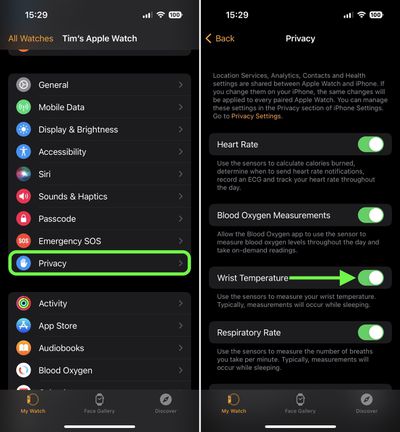
Apple Watch privacy settings wrist temperature toggle

A simple software refresh can reactivate a stalled sensor.

Step-by-Step: Reset Wrist Temperature Access

  1. On iPhone, open Watch app
  2. Go to Privacy > Health > Wrist Temperature
  3. Toggle the switch OFF
  4. Wait 10 seconds
  5. Toggle it back ON
  6. Restart both iPhone and Apple Watch

User Ascron confirmed this worked on Apple Watch Ultra 2—proof it applies across compatible models.

This forces the system to reauthorize sensor access and clear silent glitches.


Update to the Latest watchOS and iOS

Software bugs—especially in watchOS 11—have caused widespread tracking failures.

Known watchOS Issues

  • watchOS 11 caused intermittent recording for many users
  • Some nights work, others don’t—no clear pattern
  • watchOS 10.4 and 11.3 included stability fixes for health sensors

How to Update

On Apple Watch:
Settings > General > Software Update

On iPhone:
Settings > General > Software Update

User romangr regained tracking after updating to watchOS 10.4 and rebooting.

Always backup before updating. Never skip major updates if health features are failing.


Factory Reset: Fix Deep Software Conflicts

When all else fails, a full reset can resolve hidden bugs.

When to Do It

  • No data after 10+ nights
  • Sleep Focus won’t activate
  • Settings are unresponsive

How to Reset

  1. Watch app > My Watch > General > Transfer or Reset Apple Watch
  2. Select Erase All Content and Settings
  3. Wait for unpairing and erasure
  4. Set up as new or restore from backup

User Jhawk202 fixed Apple Watch 8 temperature issues with this method—same applies to Series 9.

After resetting:
– Re-enable Sleep Focus
– Wear consistently for 5+ nights
– Use Apple band only at first


Understand Where Data Appears—and What It Means

Even when working, data isn’t visible everywhere.

Where to Find Wrist Temperature

  • Health app > Browse > Body Temperature > Nightly Wrist Temperature
  • Vitals app (if supported)
  • Cycle Tracking app (for fertility predictions)

Note: Data does not appear on the watch face or in the Sleep app. It’s iPhone-only.

What the Sensor Actually Measures

  • Tracks subtle changes in skin temperature during sleep
  • Compares nightly readings to your personal baseline
  • Detects thermal shifts, not real-time body temp
  • Used for cycle predictions and wellness trends

It’s not a medical thermometer. Room temperature, bedding, or illness can affect readings.


Recognize Known Bugs and Patterns

Apple has acknowledged the issue.

Confirmed Software Bug

  • User Nycoy contacted Apple Support
  • Agent confirmed it’s a known issue
  • Fix expected via future software update
  • No public timeline

watchOS 11 Instability

  • User ottoharsh: “Some nights it records, some nights it doesn’t.”
  • Issue started after watchOS 11 update

Spontaneous Recovery

  • User NyceeZ: “It started working out of nowhere… I didn’t change anything.”
  • Suggests backend fixes or silent recalibration

If nothing works, wait—some users see data resume without intervention.


Proven Fix Checklist: Follow Every Step

✅ Confirm device is Series 9, 8, Ultra, or SE (2nd gen)
✅ Use default Sleep Focus with schedule
Manually activate Sleep Focus if auto fails
✅ Enable Wrist Detection
✅ Wear with snug Apple band, no accessories
✅ Sleep 5+ hours per night
✅ Complete 5+ consecutive nights
Toggle wrist temperature setting off/on + restart
Update to latest watchOS and iOS
Recreate Sleep Focus
Factory reset if all else fails
Contact Apple Support if unresolved

Skip nothing—even a screen protector can block data.


When to Contact Apple Support

If you’ve done everything and still see “No Data”, escalate.

What to Say

  • “I own an Apple Watch Series 9 and wrist temperature isn’t working.”
  • “I’ve met all requirements: Sleep Focus, 5+ nights, snug fit, latest software.”
  • “This is a known issue affecting multiple users.”
  • “I need diagnostics or a firmware fix.”

Request:
– Remote system check
– Escalation to engineering team
– Replacement if under warranty

If this feature was a primary reason for purchase, consider a refund.


Maintain Reliable Tracking Long-Term

Once fixed, prevent future issues.

Best Practices

  • Stick to Apple bands for sleep
  • Charge nightly if battery <50%
  • Avoid removing the watch mid-sleep
  • Recheck Sleep Focus after updates
  • Monitor Health app weekly

Mistakes to Avoid

❌ Using a custom Focus
❌ Wearing a loose or third-party band
❌ Skipping nights
❌ Ignoring updates
❌ Expecting immediate data


Final Thoughts: Patience and Persistence Win

Wrist temperature tracking on the Apple Watch Series 9 is powerful but fragile. It requires perfect alignment of hardware, software, and user behavior.

Many give up too soon—missing the 5-night baseline or the impact of a loose band. Others don’t realize manual Sleep Focus activation is a reliable workaround.

While Apple works on fixes, you can resolve most issues now. Start with the basics: default Sleep Focus, snug Apple band, 5+ nights. If that fails, toggle settings, recreate Sleep Focus, update, or reset.

And remember: some users report the feature starts working unexpectedly. Apple may be rolling out silent fixes.

Your Apple Watch Series 9 can deliver accurate wrist temperature data. With this guide, you now have every tool to make it happen.
Apple Watch Battery Issues Solved


If your Apple Watch dies by dinnertime—or worse, overnight—you’re not imagining it. Apple Watch battery issues are one of the most common complaints across all models, especially after a watchOS update. Users report 100% charge dropping to 20% by lunch, unexpected shutdowns at 40%, or needing to charge twice daily. While Apple promises up to 18 hours of battery life (36 for Ultra models), real-world performance often falls short due to software bugs, misconfigured settings, or battery degradation.

The good news? Most battery drain problems are fixable without replacing your watch. Whether you’re on a Series 5 or the latest Series 10, over 90% of fast drain cases stem from software or settings—not hardware. From disabling power-hungry features to deep resets that clear corruption, this guide delivers actionable fixes based on verified user reports, Apple’s technical specs, and proven troubleshooting methods. You’ll learn how to diagnose the cause, apply targeted solutions, and keep your Apple Watch running all day—every day.

Know Your Watch’s Real Battery Life

Apple Watch battery life comparison chart Series 10 Ultra 2 SE 8 6

Check What to Expect by Model

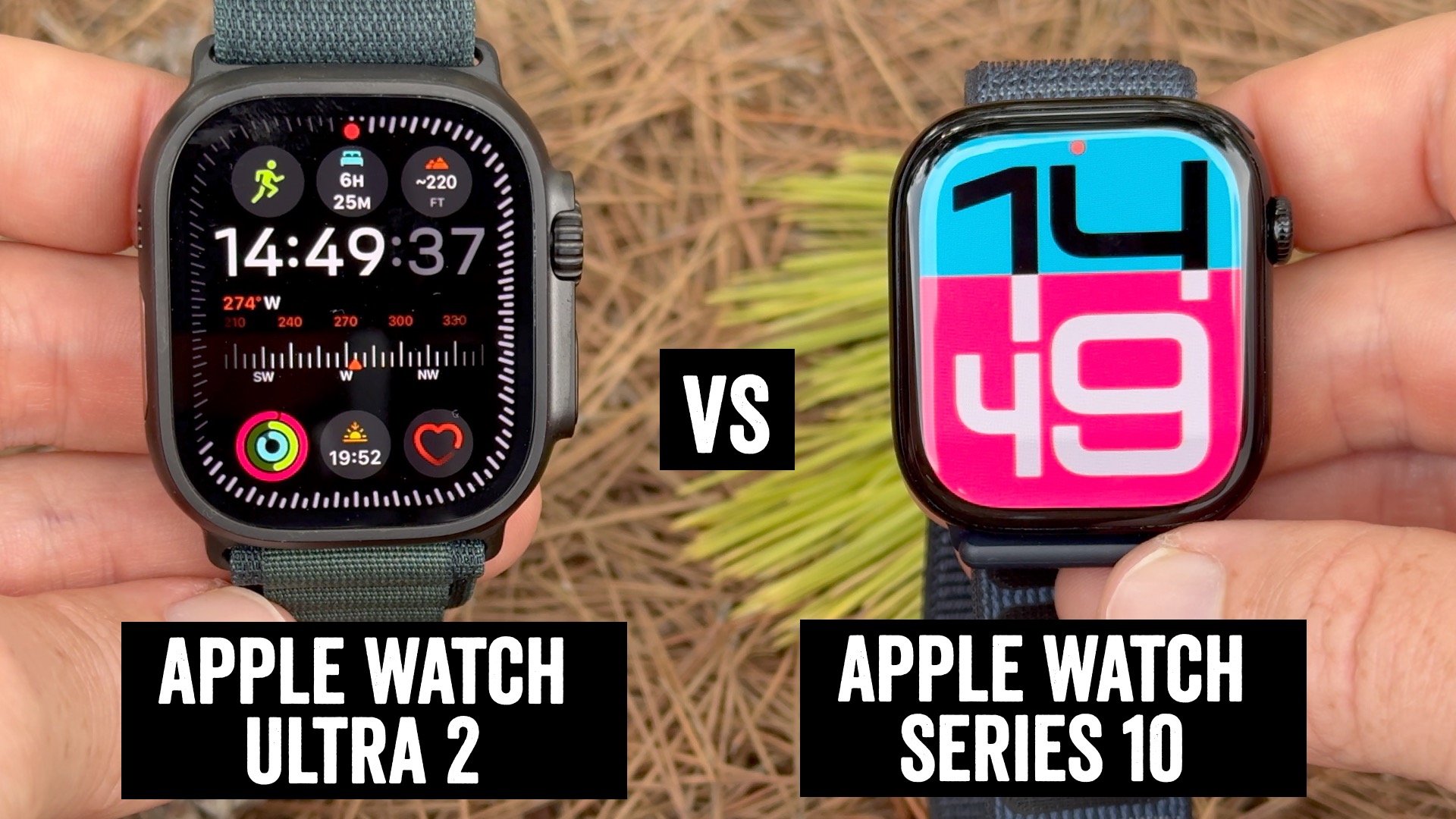
Apple advertises “up to 18 hours” for most models, but actual battery life depends heavily on usage. The Ultra 2 is the only model that consistently delivers its full 36-hour promise, even with GPS and cellular use during hikes or workouts. Other models vary:

Model Advertised Life Real-World Max (Optimized)
Apple Watch Series 10 Up to 18 hours ~30 hours
Apple Watch Ultra 2 Up to 36 hours 30–36 hours
Apple Watch SE (2nd gen) Up to 18 hours ~24 hours
Apple Watch Series 8 Up to 18 hours Up to 48 hours (light use)
Apple Watch Series 6–7 Up to 18 hours 18–24 hours

Heavy use cuts battery fast. A 60-minute outdoor run with GPS and LTE can drain 25–40%. Streaming music to AirPods uses ~10% per hour, while using the speaker uses even more.

How Low Power Mode Doubles Runtime

Low Power Mode can double your battery life by disabling non-essential features:
– Turns off Always-On Display
– Pauses background app refresh
– Reduces haptic feedback
– Slows syncing frequency

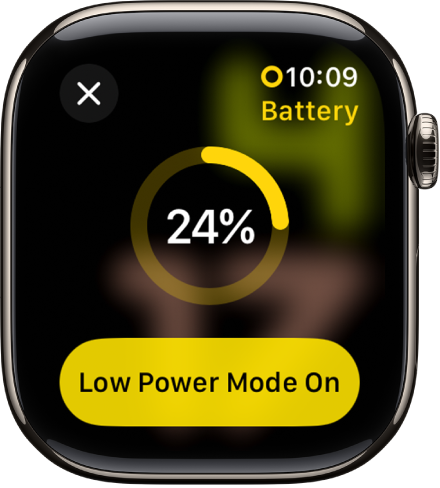
Enable it from Control Center (tap the battery icon) or let it activate automatically when charging past 80%. It stays on until you unplug—perfect for travel or long workdays.

Test Your Battery Health First

Find Maximum Capacity in Settings

Go to Settings > Battery > Battery Health on your Apple Watch. Look for:
Maximum Capacity: Your battery’s current strength vs. new.
100%: Like new.
80% or below: Degraded—Apple recommends replacement.
Battery Needs Service: Appears if hardware failure is detected.

A reading of 72% is significantly degraded and will cause fast drain, even with ideal settings.

Understand When Batteries Degrade

After 2–3 years of daily charging, most watches drop to 80% capacity. A Series 5 user reported exactly 80% at 35 months—typical for lithium-ion wear. Below this threshold:
– Unexpected shutdowns at 30–50%
– Slower performance during workouts
– Longer charging times

Apple uses automatic performance management on Series 5 and later to prevent crashes, but it may dim the screen or delay app launches.

Fix Software-Related Battery Drain

Restart After watchOS Updates

watchOS 10 and 11 caused widespread battery drain. Symptoms include:
– 100% → 23% in 7 hours
– Drain worsens over 1–3 days post-update
– Background indexing runs up to 72 hours

Fix: Wait 2–3 days first. Then:
1. Force restart Apple Watch: Hold Side Button + Digital Crown for 10 seconds.
2. Restart iPhone to fix sync issues.
3. Let indexing complete.

Most users see improvement within 48 hours.

Stop Stuck Update Loops

An update stuck in “Preparing…” can drain battery continuously.

Solution:
1. Open Watch app on iPhone > General > Software Update
2. Turn off Automatic Updates
3. Delete any pending download
4. Leave watch charging overnight

If it fails repeatedly, unpair and re-pair (see below).

Optimize Power-Hungry Settings

Apple Watch settings to save battery life screenshot

Turn Off Always-On Display

Always-On Display (AOD) reduces battery life by up to 25%. On Series 7–10, it keeps the screen dimly lit even when your wrist is down.

Fix:
1. Go to Settings > Display & Brightness > Always On
2. Toggle off

You’ll gain significant runtime—especially with bright watch faces.

Disable Background App Refresh

Apps syncing in the background waste power. Weather, fitness, and messaging apps are worst offenders.

Fix:
1. On iPhone, open Watch app
2. Tap General > Background App Refresh
3. Disable for non-essential apps

Or disable entirely if you don’t need live updates.

Limit “Hey Siri” and Raise to Wake

  • “Hey Siri” keeps the mic active—drains battery over time.
  • Disable: Settings > Siri & Search > Listen for ‘Hey Siri’
  • Raise to Wake triggers screen too often.
  • Fix: Reduce wake duration to 15 seconds in Display settings

Reduce Brightness and Animations

Max brightness uses more power. Set to 30–50% in Settings > Display & Brightness.

Also:
– Use dark watch faces—OLED screens use less power with black pixels
– Avoid animated or complex faces (e.g., Unity, Astronomy)
– Add a Battery Complication to monitor charge at a glance

Manage Connectivity to Save Power

Turn Off Cellular When iPhone Is Near

Cellular uses more power than Bluetooth. If your iPhone is in your pocket, LTE is unnecessary.

Fix:
– Swipe up > Control Center > Tap Cellular icon to disable
– Or enable Airplane Mode, then turn Bluetooth back on

Saves power during commutes or office work.

Avoid Weak Wi-Fi and Signal Hunting

In low-coverage areas, your watch constantly searches for signal.

Signs of weak connection:
– Blue Wi-Fi icon with one bar
– Green cellular icon flickering

Fix: Enable Airplane Mode, then manually re-enable Bluetooth.

Also helps if you’re using a VPN or ad-blocking profile—these can interfere with Watch connectivity.

Identify and Stop Battery-Sucking Apps

Use Battery Usage to Find Culprits

Check which apps drain power:
1. On iPhone, open Watch app
2. Tap Battery
3. View usage for Last 24 Hours or Last 10 Days

If one app uses disproportionate power (e.g., 40% in 6 hours), it may be malfunctioning.

Common culprits:
– Third-party weather apps with “Always” location access
– Fitness apps running GPS in background
– Messaging apps with constant notifications

Fix: Uninstall or disable background refresh for the app.

Stop Streaming Audio from Watch

Playing music via Bluetooth headphones or watch speaker drains battery fast:
– Up to 15% per hour on speaker
– ~10% per hour via AirPods

Use your iPhone instead for long listens.

Apply Advanced Fixes That Work

Unpair and Re-Pair Your Watch

This fix resolves 80% of persistent drain cases. It clears corrupted data, stuck updates, and sync loops.

Steps:
1. On iPhone, open Watch app > My Watch > Apple Watch > Unpair
2. Wait for backup to finish
3. Re-pair and restore from backup

Reported results:
– Ultra 2: 10h → 20+ hours
– Series 6: 5h → 11+ hours
– Series 8: From dying by afternoon to 66% at bedtime

Do this after major updates or unexplained drain.

Factory Reset and Set Up as New

If re-pairing fails, go nuclear.

Steps:
1. On watch: Settings > General > Transfer or Reset > Erase All Content and Settings
2. Keep cellular plan if prompted
3. Shut down iPhone completely
4. Re-pair watch and set up as new (don’t restore backup)

Why it works: Eliminates corrupted settings, bad app data, and sync conflicts.

One user saw 34% battery remaining after 19 hours of normal use post-reset.

Reset Sync Data and Network Settings

Clears hidden glitches.

Reset Sync Data:
– iPhone: Watch app > General > Reset > Reset Sync Data

Reset Network Settings:
– iPhone: Settings > General > Reset > Reset Network Settings

May take 1–2 days to stabilize, but often stops phantom drain.

Handle Hardware and Charging Right

Apple Watch original charger vs third party charger

Replace Degraded Battery

If battery health is below 80%, replacement is the only fix.

Costs (U.S.):
– Series 4 and newer: $99
– Older models: $79
– With AppleCare+: Free when health <80%

Process:
– Apple may replace the entire unit with a refurbished one
– Turnaround: ~2 weeks
– New serial number assigned

Contact Apple Support or visit a store for diagnostics.

Use Proper Charging Setup

Avoid:
– Charging via laptop USB ports (insufficient power)
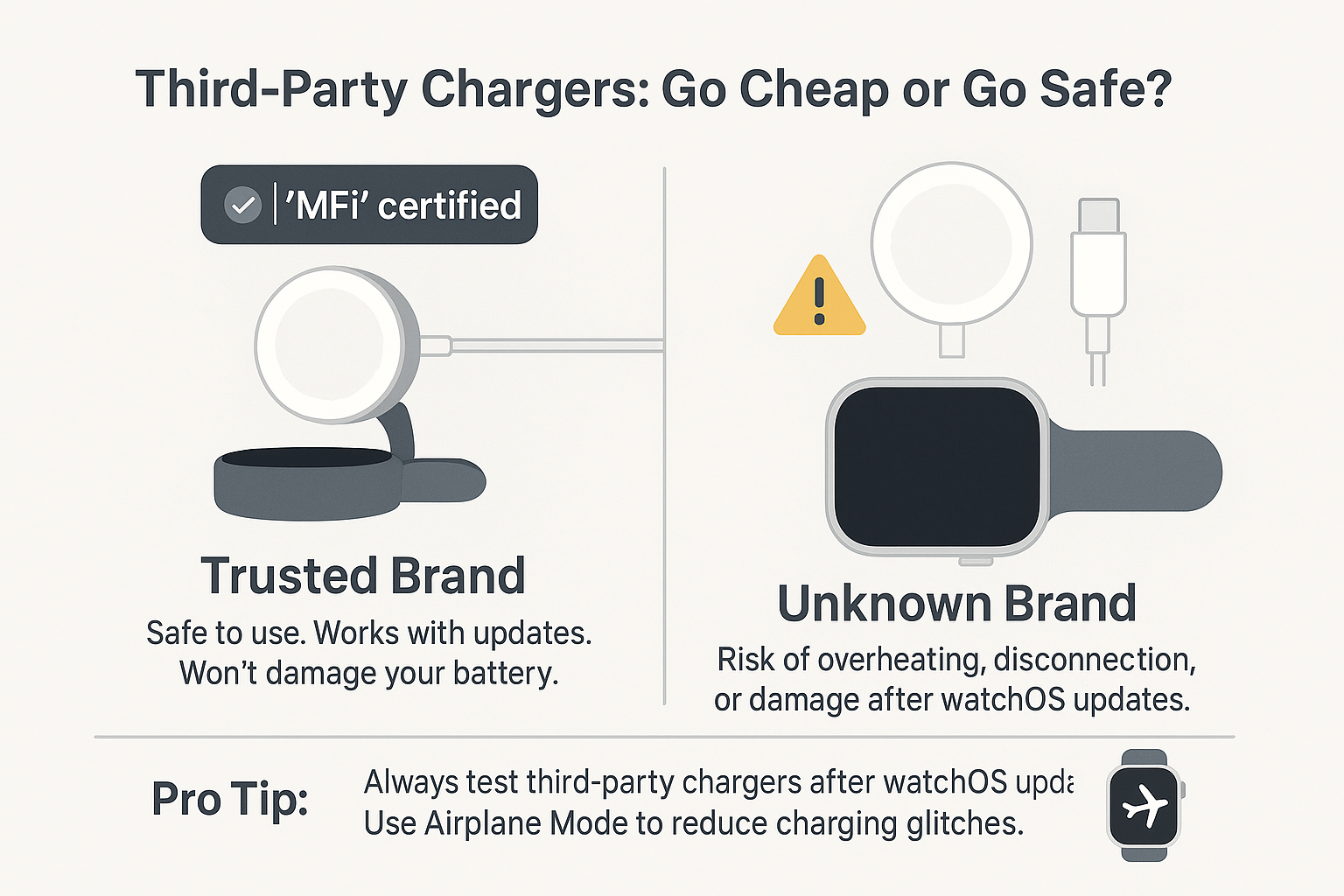
– Third-party chargers (may not deliver full wattage)

Do:
– Use original magnetic charger
– Pair with 20W USB-C adapter for fastest charge (~1–2 hours)
– Charge in room temperature (62°F–72°F / 16°C–22°C)

Never charge in hot cars or freezing temps—extremes accelerate degradation.

Prevent Future Battery Drain

Adopt Smart Charging Habits

Lithium-ion batteries hate extremes.

Best practices:
Charge nightly—don’t let it drop to 0%
– Avoid leaving at 100% for days
– For storage: Keep at 50% charge
– Enable Optimized Battery Charging to reduce wear

But if you need max runtime (e.g., travel), disable Optimized Charging temporarily.

Maintain Software Wisely

  • Update watchOS—patches often fix battery bugs
  • But disable auto-updates if new versions are unstable
  • Reboot watch weekly to clear background tasks

Check Apple’s Feedback Page to report issues—forums aren’t monitored.

Optimize Daily Usage

  • Use AirPods, not watch speaker
  • Let iPhone handle GPS for runs
  • Turn off cellular when iPhone is near
  • Enable Theater Mode in dark rooms to prevent accidental wakes

When to Contact Apple

Spot Hardware Failure Signs

Seek help if you see:
Unexpected shutdowns at 30–50%
– Battery health below 80%
– Watch gets hot during use or charge
– Drains from 100% to 10% overnight
– Takes much longer to charge than before

These indicate hardware failure, not software.

Get Support and Service

Options:
Apple Support app: Remote diagnostics
Apple Store: In-person testing and battery swap
Mail-in service: Available in most regions

Bring usage logs and battery health screenshots for faster resolution.


Final Note: Most Apple Watch battery issues are fixable—and usually stem from software, not hardware. Start with simple fixes like restarting and disabling Always-On Display. If drain persists, unpair and re-pair your watch. Only when battery health drops below 80% should you consider replacement. With the right settings and maintenance, your Apple Watch can last all day, every day.

Apple Watch Battery Draining Fast? Fix It Now


If your Apple Watch battery dies by midday—despite charging overnight—you’re not imagining things. Thousands of users report fast battery drain, especially after recent watchOS updates like 10.4 and 11.0. Some see their battery drop 30% overnight, while others struggle to make it through the workday. The good news? In most cases, the problem isn’t a faulty battery—it’s fixable with the right settings and troubleshooting. Whether you own a Series 9, Ultra 2, or SE (2nd gen), this guide will show you how to diagnose and stop the drain—step by step. From disabling power-hogging features to performing deep system resets, you’ll learn exactly what works, based on real user results and Apple’s own technical data.


Decode the Real Causes of Fast Drain

Check What’s Normal vs. What’s Not

Apple promises up to 18 hours of battery life for most models under standard use:
– 90 time checks
– 90 notifications
– 45 minutes of app use
– One 60-minute GPS workout

The Ultra 2 goes further—up to 36 hours, or 72 hours with Low Power Mode. But real-world usage varies. Heavy GPS tracking, streaming, or constant alerts can reduce runtime to 8–12 hours. If you’re getting less than 12 hours with light use, something’s wrong.

Spot Problematic Overnight Drain

Losing 10–15% overnight is normal—your watch syncs health data, checks for updates, and monitors sleep. But if it drops 30–40% while idle, that’s a red flag. This kind of drain usually points to a software glitch, rogue app, or failing battery, not just settings.


Shut Down Power-Hungry Display Settings

Apple Watch display settings battery drain

Turn Off Always-On Display

The #1 battery killer? Always-On Display (available on Series 5 and later). It keeps your screen lit even when your wrist is down. On bright OLED models (Series 6+), this can cost 3–5 hours of battery life.
Fix it:
1. Open Settings > Display & Brightness > Always On
2. Toggle it Off
You’ll immediately notice longer battery life—especially if you’re not constantly checking the time.

Cut Screen Wake Time in Half

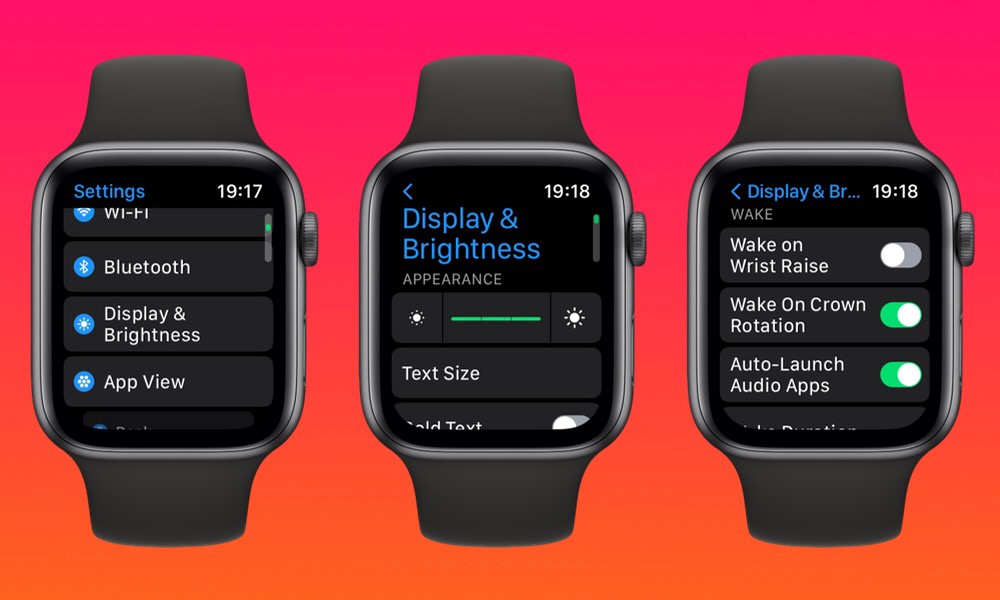
Every time your screen wakes, it uses power. Two features cause the most unnecessary activations:
Raise to Wake
Long wake duration (70 seconds)

If you glance at your watch 100+ times a day, these add up fast.
Fix it:
1. On your iPhone: Open Watch app > Display & Brightness
2. Turn off Raise to Wake
3. Set Wake Duration to 15 seconds
Now, your screen only wakes when you tap it or press the Digital Crown—saving significant battery.

Switch to a Dark, Simple Watch Face

Complicated faces with live updates or animations (like Infograph Modular) drain power. Each complication pulls data, wakes the CPU, and lights up the screen.
Best choices:
X-Large with 1–2 complications
Activity Analog with minimal extras
Flat black faces (on OLED models)

On OLED screens, black pixels use zero power. A dark-themed face reduces energy use every second it’s on.


Optimize Connectivity to Save Power

Apple Watch Bluetooth Wi-Fi battery usage

Stay Close to Your iPhone

Your Apple Watch uses Bluetooth to connect to your iPhone—the most power-efficient method. When your phone is out of range, it switches to Wi-Fi or cellular, which use far more energy.
Tip: Keep your iPhone nearby when possible. If you’re out of range, consider Airplane Mode with Wi-Fi enabled for specific tasks.

Avoid Weak Signal Zones

Poor Wi-Fi or cellular signal forces your watch to constantly search for a connection. This background task burns battery even when idle.
Signs of weak signal:
– Blue Wi-Fi or green cellular bars show 1–2 bars in Control Center
– Battery drops rapidly with no user activity

Fix:
– Use Airplane Mode in elevators, basements, or remote areas
– Re-enable Wi-Fi or Bluetooth only when needed

Disable Background App Refresh

Apps like weather, news, or fitness trackers refresh in the background, syncing data and waking the screen.
Fix it:
1. On iPhone: Watch app > General > Background App Refresh
2. Turn it Off
This stops unnecessary updates and cuts idle battery drain.


Reduce GPS and Sensor Load

Enable Workout Power Saving Mode

GPS and heart rate sensors are major power users. A 60-minute outdoor run can use 15–20% of your battery just for GPS.
Fix it:
1. Go to Settings > Workout > Power Saving Mode > On
This reduces GPS and heart rate sampling frequency—ideal for long hikes or runs.

Pair a Bluetooth Chest Strap

The wrist-based heart sensor uses constant LED light, which drains power. A Bluetooth chest strap (like Polar H10) measures heart rate more efficiently.
Fix it:
1. Settings > Bluetooth > Pair Device
2. Connect your chest strap
You’ll save 10–15% during workouts and get more accurate readings.

Turn Off Blood Oxygen Monitoring

If you don’t use sleep oximetry, disable it:
1. Watch app on iPhone > Privacy > Health > Blood Oxygen > Off
This stops nighttime readings and reduces overnight drain.


Fix Software and Update Issues

Apple Watch watchOS update stuck preparing

Install the Latest watchOS

Apple often releases patch updates (e.g., 11.0.1) to fix battery bugs. An outdated or corrupted OS can cause hidden background processes.
Check for updates:
1. Watch app on iPhone > General > Software Update
2. Install any available update
Even if you’re on the latest version, reinstalling can fix corrupted files.

Fix Stuck or Pending Updates

A pending update stuck on “Preparing” can cause 24–48 hours of heavy background activity.
Fix it:
1. Keep your watch on the charger
2. Wait up to 48 hours—some users report completion only after extended charging
3. If stuck:
Settings > General > Usage > Software Update > Delete Update
– Retry download later
Avoid automatic updates if you’re prone to battery issues.

Restart Both Devices

A simple restart clears temporary glitches.
Do this:
1. Restart Apple Watch: Hold side button > swipe power off
2. Restart iPhone: Hold volume + side button > slide to power off
3. Turn both back on
Many users report immediate improvement after this step.


Perform Advanced System Resets

Reset Sync Data

Sync errors between iPhone and Watch cause background processes that drain battery.
Fix it:
1. On iPhone: Watch app > General > Reset > Reset Sync Data
2. Wait 10 minutes for re-sync
This clears corrupted messages, health data, or app sync issues.

Unpair and Re-pair Your Apple Watch

If drain persists, unpairing and re-pairing often fixes deep software issues.
Steps:
1. Watch app > All Watches > (i) > Unpair Apple Watch
2. Let it erase completely
3. Restart iPhone (critical)
4. Set up as new—don’t restore from backup
This removes corrupted app data and pairing glitches.

Factory Reset (Erase All Content)

If all else fails, erase everything:
1. Apple Watch: Settings > General > Transfer or Reset > Erase All Content
2. For cellular models, choose keep cellular plan
3. After reset, restart iPhone before re-pairing
4. Set up as new—don’t restore

User result: One Series 9 owner went from dead by 3 PM to 34% after 19 hours using this method.


Check Battery Health and Hardware

View Maximum Capacity

Battery health drops over time. After 2–3 years, it often falls below 80%.
Check it:
1. On Apple Watch: Settings > Battery > Battery Health
2. Look for:
100%: New
80–89%: Degraded
Below 80%: Needs replacement
“Battery Needs Service”: Contact Apple

If capacity is below 75%, expect poor daily performance.

Recognize Failing Battery Signs

Hardware failure shows up as:
Unexpected shutdowns at 20–30%
Battery jumps from 50% to 20% in minutes
Long charging times or won’t reach 100%
– Device gets hot during normal use

If you see these, it’s likely a failing battery, not software.

Avoid Extreme Temperatures

Heat kills lithium-ion batteries.
– Don’t charge in direct sunlight, saunas, or hot cars
– Avoid workouts in >35°C (95°F) environments
Cold temps (<0°C / 32°F) also reduce capacity temporarily.


Optimize Charging Habits

Use Optimized Battery Charging

This feature learns your routine and delays full charge until you typically wear the watch. It extends battery lifespan.
Enable it:
Settings > Battery > Battery Health > Optimized Battery Charging > On

If you need a full charge immediately, turn it off temporarily.

Charge Nightly, Avoid Deep Discharge

Lithium-ion batteries prefer frequent top-ups.
– Charge every night
– Avoid letting it drop below 10% regularly
– Don’t leave it at 100% for days—use Optimized Charging

This keeps the battery in peak condition longer.

Use Certified Charger and Clean Contacts

Dirty charging pads or third-party cables reduce efficiency.
Best practice:
– Use Apple-certified charger and cable
– Wipe back of watch and charger with dry cloth
– Charge from wall adapter, not sleeping laptop USB port

Ensure solid contact for full-speed charging.


When to Replace or Upgrade

Get a Battery Replacement

If battery health is below 80%, Apple replaces it:
Free under AppleCare+
$99 out of warranty (U.S.)
Available at Apple Stores, Authorized Providers, or via mail-in

Never attempt DIY replacement—batteries are glued and soldered. You’ll void warranty and risk damage.

Consider Upgrading Your Watch

If your watch is over 5 years old, the battery may never recover.
Upgrade options:
Apple Watch Ultra 2: 36-hour battery, ideal for heavy users
Series 9: Improved efficiency, longer life than older models
Garmin or Fitbit: Offer 7–14 day battery life for fitness-focused users

Upgrade if software fixes fail and battery health is poor.


Final Fix Checklist (Quick Steps)

Immediate Actions (5 Minutes)

  • ✅ Turn on Low Power Mode (Control Center)
  • ✅ Disable Always-On Display
  • ✅ Turn off Raise to Wake
  • ✅ Reduce Wake Duration to 15 sec
  • ✅ Check for software updates

Intermediate Fixes (10–15 Minutes)

  • ✅ Check Battery Health
  • ✅ Review Battery Usage in Watch app
  • ✅ Turn off Background App Refresh
  • ✅ Disable “Hey Siri”
  • ✅ Reduce brightness to 40–50%

Advanced Solutions (30+ Minutes)

  • Restart both devices
  • Reset Sync Data
  • Unpair and re-pair (set up as new)
  • Factory reset if needed
  • Contact Apple Support if “Battery Needs Service”

Most Apple Watch battery drain issues are fixable without repair. Start with display and connectivity settings, then move to software resets. If your battery health is below 80%, consider replacement. Combine multiple optimizations—each small change adds up. With the right tweaks, you can restore reliable all-day battery life.

How to Fix Apple Watch 9 Touch Screen Not Working


If your Apple Watch 9 touch screen is not working, you’re likely frustrated—especially if you rely on it for workouts, messages, or health tracking. You’re not alone. A growing number of users report intermittent or total touchscreen failure, even on devices with no visible damage. The good news? Most cases can be resolved—if you know the right steps. Whether the issue is caused by a recent watchOS update, a minor drop, or water exposure, this guide delivers immediate fixes, accurate diagnostics, and clear repair options so you can get your Apple Watch back in action fast.


Fix Unresponsive Touchscreen Now

When your Apple Watch 9 stops responding to taps or swipes, start with these fast, easy solutions. Many users restore full functionality in under a minute.

Force Restart Your Watch

A force restart is the single most effective first step. It clears software glitches that can freeze the touchscreen.

How to do it:
1. Press and hold the Side Button and Digital Crown at the same time.
2. Keep holding for 10–15 seconds.
3. Release when the Apple logo appears.

Success rate: High for temporary freezes
⏱️ Time required: Less than 30 seconds
🔄 Try up to 3 times if the screen flickers but remains unresponsive

Important: If the screen works for 3–5 seconds after restart and then dies again, this strongly suggests hardware damage—not a simple software bug.


Clean Screen and Hands

Capacitive touchscreens require direct skin contact. Oily fingers, dirt, or moisture can block input.

Immediate actions:
– Wipe the display with a dry, soft, lint-free cloth
– Wash and dry your hands thoroughly
– Remove gloves, wet sleeves, or soapy residue
– Avoid using while hands are damp

🛑 Avoid: Harsh cleaners, paper towels, or thick screen protectors that reduce sensitivity
Best practice: Use an Apple-designed or precision-cut screen protector like the Ultra Armorite model

Even a thin layer of hand lotion can disrupt touch response—clean both your skin and the screen first.


Disable Water Lock Mode

After swimming or handwashing, Water Lock automatically disables the touchscreen to prevent accidental taps. If you forget to turn it off, your watch may seem broken.

How to disable:
– Tap the water droplet icon on screen
– Or, turn the Digital Crown until you hear a chime and the lock releases

🔍 Look for: A small water droplet symbol in the status bar
💡 Pro tip: If haptics still work (you feel taps) but the screen doesn’t respond, Water Lock is almost certainly on

This simple fix is often overlooked—don’t skip it.


Diagnose the Root Cause

Apple Watch 9 watchOS update troubleshooting flow chart

Before diving into complex repairs, determine whether the problem is software-related or hardware-based. Your next steps depend on the answer.

Check for watchOS Update Issues

Several watchOS updates have triggered touchscreen bugs across Apple Watch models, including the Series 9.

Known problematic versions:
watchOS 9.6.2: Caused intermittent touch failure on Series 7 and 9
watchOS 11.4: Linked to touch dropouts on newer models
Post-update symptoms:
– Touch works briefly after restart
– Double-tap needed to activate buttons
– White borders around app icons (sign of accidental accessibility mode)

🔄 Fix: Install the latest watchOS patch—Apple often releases fixes within weeks

How to check for updates:
1. Open the Watch app on your iPhone
2. Go to General > Software Update
3. Download and install any available update

📶 Requirements: Wi-Fi and at least 50% battery

Delaying updates increases the risk of compatibility bugs—stay current.


Test Accessibility Settings

Accidental activation of Touch Accommodations can mimic a broken screen.

Check on your watch:
1. Open Settings > Accessibility > Touch
2. Review:
Tap Assistance: Requires longer presses
Switch Control: Overrides normal touch input

Fix:
– Turn off any active settings
Reboot and test responsiveness

🔎 User clue: If you must tap twice or see white outlines around icons, Tap Assistance was triggered accidentally

This setting is often turned on by mistake during accidental screen interactions.


Software Fixes That Work

If basic steps fail, try these deeper software solutions.

Update watchOS Immediately

An outdated or buggy OS version may be the root cause.

Steps:
1. Open the Watch app on your iPhone
2. Go to General > Software Update
3. Install any available update

Success story: Users with Series 6 saw touch restored after patching watchOS 8.5.1—similar fixes apply to Series 9

If no update is available, check again daily—Apple often rolls out patches gradually.


Unpair and Re-pair Your Watch

This clears corrupted data and resets the connection between your iPhone and watch.

Steps:
1. In the Watch app, tap All Watches
2. Tap the “i” icon next to your Series 9
3. Select Unpair Apple Watch
4. Confirm (backup is optional)
5. Set up as new or restore from backup

Time needed: 15–30 minutes
💡 Expert tip: Try setting up without restoring backup first. If touch works, the issue was in your old data.

This fix resolves deep software conflicts that restarts can’t fix.


Close or Reinstall Problematic Apps

Touch issues may only affect specific apps.

To test:
1. Press the Digital Crown to open App Switcher
2. Swipe up to close suspicious apps
3. If problem persists, delete and reinstall the app

🧪 Diagnostic trick: If touch works in Clock or Messages but not in a third-party app, the app—not your screen—is the problem

Some poorly coded apps can freeze system resources and disrupt touch input.


Signs of Hardware Damage

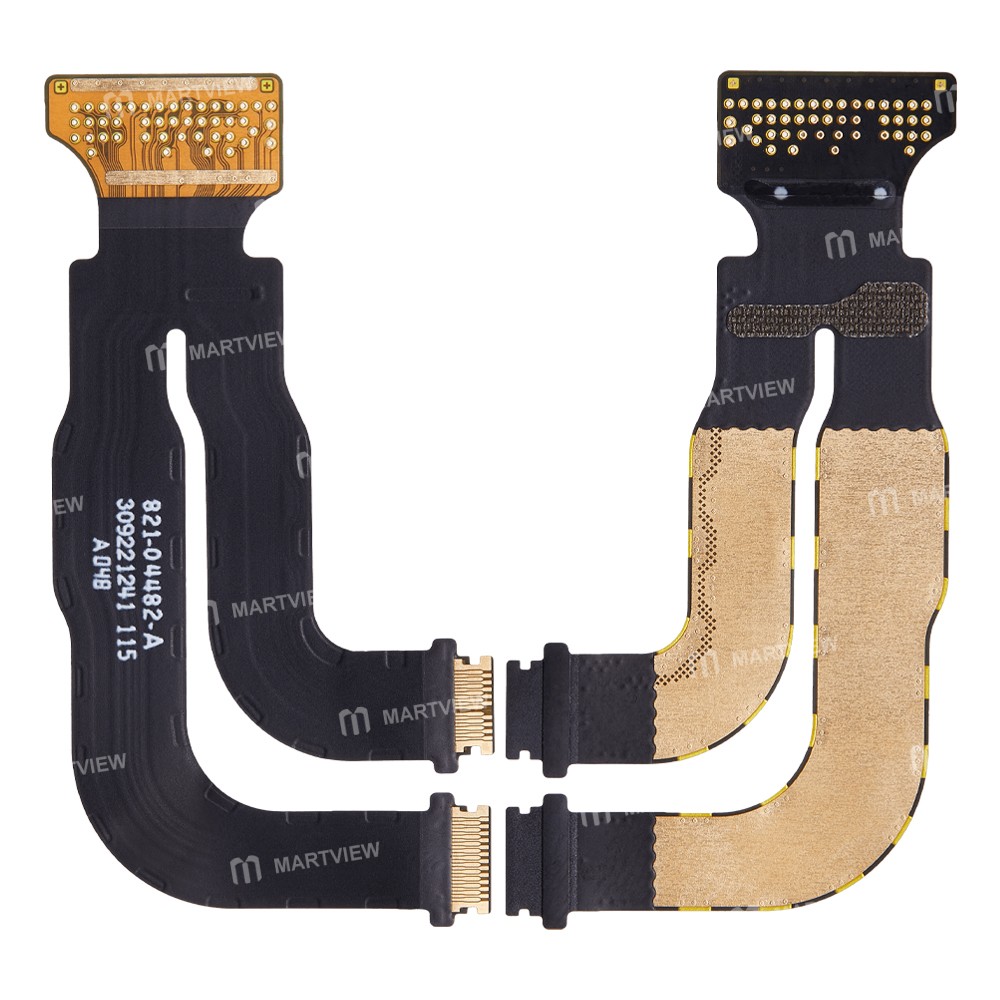
Apple Watch 9 internal components diagram digitizer flex cable

When software fixes fail, hardware may be to blame.

Impact from a Recent Drop

Even a small fall can damage internal components.

Red flags:
– Touch works only briefly after restart
– No visible cracks
– Side button and Digital Crown still work
– Incident occurred within the last week

🔧 Likely issue: Damaged digitizer or flex cable connecting screen to logic board
👥 Community insight: Users like TS_Annabelle report this pattern often requires professional screen replacement

The Series 9 has no user-replaceable parts—don’t open it yourself.


Water or Moisture Exposure

Despite WR25 water resistance, liquid can seep in during hand washing or swimming.

Symptoms:
– Sudden touch failure after water contact
– Muffled speaker or microphone
– Discoloration near grilles
– Charging port won’t connect

Warning: Water damage is not covered by standard warranty

🔄 What to do: Dry with a soft cloth—never use heat or compressed air
🛠️ If touch remains dead, professional service is required

Moisture under the display can short the digitizer—don’t delay repair.


Repair Options and Costs

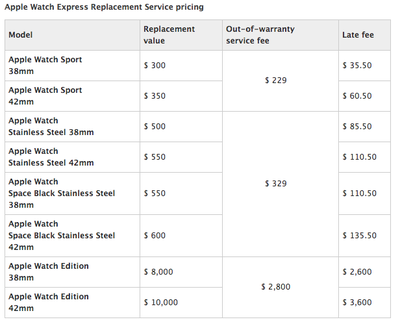
Apple Watch 9 repair cost comparison AppleCare+ vs out of warranty

If troubleshooting fails, it’s time to repair.

Contact Apple Support First

Always start with Apple—they can run remote diagnostics and guide you.

Ways to reach Apple:
Phone: 1-800-MY-APPLE (1-800-692-7573)
Online: support.apple.com
In person: Visit an Apple Store or Authorized Service Provider

🧰 What to expect: Apple may ask for your serial number and run diagnostics—even if the screen is dead


Check Warranty and AppleCare+

Your repair cost depends on coverage.

Coverage Type Screen Repair Cost Notes
AppleCare+ $69 Covers accidental damage, including drops
Standard Warranty Free Only if defect—not damage—is confirmed
Out of Warranty $349+ Full replacement fee if not under AppleCare+

💡 Tip: If you’ve had a drop or water incident, AppleCare+ saves hundreds


Verify Eligibility for Service Programs

Apple sometimes offers free repair programs for known issues.

Example:
Apple Watch Series 6 Blank Screen Program covers display failures—even out of warranty

🔍 Action: Enter your serial number on Apple’s support site to check for active programs that might apply to your Series 9

You could qualify for a free repair even if your device is out of warranty.


Prevent Future Touch Issues

Keep your Apple Watch 9 responsive with these habits.

Keep watchOS Updated

Apple patches touch bugs quickly—stay current.

Best practices:
– Enable automatic updates
– Install updates within a week of release
– Avoid skipping multiple versions

🔄 Why it matters: Delayed updates increase risk of compatibility bugs


Use a Protective Case

Even minor drops can damage internal components.

Recommended:
Apple-designed cases or Spigen, OtterBox models
– Avoid metal or magnetic cases that interfere with sensors

💥 Fact: Series 9 has no user-serviceable parts—protection is your first defense


Handle Water Exposure Carefully

Water-resistant ≠ waterproof

Do:
– Rinse with fresh water after saltwater swims
– Dry thoroughly before charging
– Avoid showers, saunas, or water slides

Don’t:
– Press buttons underwater
– Submerge beyond 25 meters
– Use with soapy or chemically treated water


Final Fix Checklist

Use this step-by-step plan:

  1. Clean screen and hands
  2. Disable Water Lock
  3. Force restart
  4. Check Accessibility settings
  5. Update watchOS
  6. Unpair and re-pair (with or without backup)
  7. Test app-specific issues
  8. Contact Apple Support if no improvement

If touch works after restart but fails again: Likely hardware damage—seek repair
If fix is temporary: Monitor for recurrence—backup data now


Final Note: The Apple Watch 9 touch screen not working issue is usually fixable. Start with software—most cases respond to a force restart or update. If the problem persists, especially after a drop or water exposure, hardware repair is likely needed. Acting fast improves your chances of a full recovery—so don’t wait. With AppleCare+ and proper care, your watch can stay responsive for years.

Fix Apple Watch Alarm Not Working Issue


Is your Apple Watch alarm not working when it should be buzzing or vibrating? You’re not imagining it—this is a common and frustrating issue affecting Apple Watch users across models and software versions. Whether you rely on your watch to wake up, stay on schedule, or manage health routines, a silent alarm can throw off your entire day. The good news: in most cases, the fix is simple and doesn’t require a trip to Apple Support.

The problem is rarely hardware-related. Instead, it’s usually due to misconfigured settings, silent modes, Focus interference, or connectivity gaps between your iPhone and watch. Alarms set on your iPhone might not mirror properly. Your watch could be locked or unlocked in a way that changes alarm behavior. Even your AirPods being connected can silently redirect the alarm sound away from your wrist.

In this guide, you’ll learn step-by-step how to diagnose, troubleshoot, and fix every possible cause of a non-working Apple Watch alarm. From enabling “Break through Silent Mode” to checking audio routing and resetting settings after updates, we’ll cover everything you need to ensure your alarm works—tonight and every night.


Confirm Where Your Alarm Is Set

The first step is knowing where your alarm was created—because location determines reliability.

Set Alarms Directly on Your Apple Watch

For maximum reliability, set alarms directly on your Apple Watch:

  1. Press the Digital Crown to open the app grid.
  2. Tap the Alarms app (bell icon).
  3. Tap Add Alarm, set the time using the Digital Crown, and tap the checkmark.
  4. Ensure the toggle is green (ON).
  5. Label it (e.g., “Wake Up”) to avoid confusion.

Why this works: These alarms run independently of your iPhone. No Bluetooth? No problem. They’ll trigger even if your phone is off or out of range.

⚠️ Alarms set only on the iPhone Clock app won’t appear on your watch unless mirroring is enabled.

Enable iPhone Alarm Mirroring

If you prefer setting alarms on your iPhone:

  1. Open the Watch app on your iPhone.
  2. Go to My Watch → Clock.
  3. Turn on Push Alerts from iPhone.

Now, alarms you create in the iPhone’s Clock app will appear and trigger on your Apple Watch.

✅ Pro Tip: Use watch-based alarms for critical wake-ups. iPhone alarms depend on connectivity and can fail if Bluetooth drops.

Check Your Sleep/Wake Up Alarm Settings

If you use the Sleep app, ensure the wake-up alarm is actually enabled:

  • On iPhone: Health app → Browse → Sleep → Edit Schedule
  • Set your Wake Up Time
  • Tap Sounds & Haptics and choose your alert style
  • Confirm Wake Up Alarm is ON

Even with a sleep schedule, the alarm can be disabled independently—so double-check this.


Fix Silent Mode and Haptic Settings

Apple Watch settings sounds haptics silent mode

Your alarm may be set perfectly—but silenced by system settings.

Turn On Break Through Silent Mode

This is the #1 fix for silent alarms. If disabled, your alarm won’t sound when Silent Mode is on.

  • Open the Alarms app on your Apple Watch
  • Tap and hold your alarm → Edit
  • Ensure Break through Silent Mode is ON

🔊 Without this, your alarm may only vibrate—or do nothing at all.

Boost Haptic Strength for Better Wake-Up Power

Weak vibrations are easy to miss during deep sleep.

  • On Apple Watch: Settings → Sounds & Haptics → Haptic Strength
  • Select Prominent

Users consistently report that Prominent haptics are far more effective than the default setting—especially for heavy sleepers.

Increase Alert Volume and Test It

Alarm volume is separate from ringer or media volume.

  • Go to Settings → Sounds & Haptics
  • Drag Alert Volume to at least 75%
  • Tap the test tone to confirm sound

Also, check the status bar for the mute icon (bell with slash). If red, Silent Mode is on—ensure “Break through” is enabled.


Disable Do Not Disturb and Focus Modes

Apple Watch focus mode settings do not disturb alarm

Active Focus modes can block alarms—even if they seem harmless.

Turn Off Do Not Disturb

  • Swipe up from your watch face to open Control Center
  • Look for the moon icon
  • If highlighted, tap it to disable

DND silences all alerts, including alarms, unless they’re allowed to break through.

Allow Alarms in Sleep Focus

Sleep Focus can override alarm behavior.

  • On iPhone: Settings → Focus → Sleep → Options
  • Tap Allow Notifications From
  • Ensure Alarms is selected

Otherwise, your wake-up alarm may be suppressed.

Review Custom Focus Settings

User-created Focus modes (e.g., Work, Reading) may block alarms.

  • On iPhone: Settings → Focus
  • Review each active mode
  • Under Allowed Notifications, confirm Alarms are permitted

✅ Best Practice: Temporarily disable all Focus modes when testing alarm functionality.


Fix Connectivity and Mirroring Issues

If your alarm is set on the iPhone, connectivity is critical.

Check Bluetooth Connection

GPS-only Apple Watches need your iPhone nearby.

  • Open Control Center on your watch
  • Look for the phone icon:
  • Green: Connected
  • Red slashed: Disconnected
  • Wi-Fi only: Connected to network, but not iPhone

If red, bring your iPhone within 30 feet and retry.

Confirm Push Alerts Are Enabled

Even with Bluetooth, mirroring must be on.

  • On iPhone: Watch app → My Watch → Clock
  • Ensure Push Alerts from iPhone = ON

Without this, iPhone alarms won’t appear on the watch.

Force Dual Alarms with Airplane Mode Trick

Want your alarm on both devices? Try this:

  1. Before bed, enable Airplane Mode on your Apple Watch
  2. Manually turn Wi-Fi and Bluetooth back on
  3. This keeps sleep tracking active but breaks full pairing
  4. Result: Alarm plays on both iPhone and watch

✅ Why it works: When the watch can’t sync, the iPhone treats the alarm as independent.


Fix the Lock State Alarm Bug

One of the most confusing issues: alarm only plays on one device based on whether your watch is locked.

Why Locked vs Unlocked Matters

  • Unlocked watch overnight → Alarm only on watch
  • Locked watch (passcode protected) → Alarm plays on both watch and iPhone

If you unlock your watch before bed and leave it on, it stays unlocked—and silences the iPhone alarm.

Workaround: Re-secure the Watch Before Bed

To trigger dual alarms:

  1. Take the watch off
  2. Put it back on without unlocking
  3. The display stays dark, passcode remains active
  4. Now, alarm will trigger on both devices

✅ This is by design but poorly documented. Use this trick for backup alarms.


Update Software and Restart Devices

Apple Watch watchOS update software restart

Outdated or buggy software is a common culprit—especially after OS updates.

Install Latest watchOS and iOS

Apple has fixed alarm bugs in recent updates.

  • Update Apple Watch: Settings → General → Software Update
  • Update iPhone: Watch app → General → Software Update

Example: A known bug in watchOS 11 caused alarms to display but not sound—fixed in watchOS 11.3.

✅ Always check for updates after an alarm fails unexpectedly.

Restart Apple Watch

A simple reboot clears temporary glitches.

  • Press and hold Side Button + Digital Crown for 10 seconds
  • Wait for Apple logo
  • Let it restart fully

Test the alarm again after reboot.

Reset Network or Unpair if Needed

If problems persist:

  • Toggle Airplane Mode on/off
  • Restart iPhone as well
  • As last resort: Unpair and re-pair Apple Watch
  • Watch app → My Watch → General → Reset → Unpair
  • Set up again and retest

⚠️ This erases data, so back up first.


Test Audio Output and Routing

Your alarm might be playing—but not on the device you expect.

Check Audio Output Destination

If AirPods are connected, the alarm may play there instead.

  • Swipe up to Control Center
  • Tap Audio Output icon (circle with triangle)
  • Ensure output is set to Apple Watch, not AirPods

⚠️ Real user case: Alarm played in AirPods left on a nightstand—no sound on wrist.

Disconnect Bluetooth Devices Temporarily

To test:

  1. Turn off AirPods or hearing aids
  2. Set a test alarm for 2 minutes ahead
  3. Confirm sound and haptics on watch

If it works, the issue was audio routing.

✅ Pro Tip: Use Prominent haptics as a backup—even if sound routes away.


Test and Prevent Future Failures

Don’t wait until morning to find out it failed.

Run a Live Alarm Test

  • Set an alarm for 2–3 minutes in the future
  • Enable Break through Silent Mode
  • Turn on Do Not Disturb (to test override)
  • Wait for it to trigger
  • Confirm:
  • Sound plays
  • Haptics vibrate (strongly)
  • Screen lights up
  • iPhone also alerts (if applicable)

✅ Do this weekly, especially after software updates.

Set Multiple Alarms for Critical Wake-Ups

For peace of mind:

  • One alarm on Apple Watch
  • One via Sleep Schedule
  • One on iPhone Clock app

Redundancy ensures at least one will work.


Final Tips to Keep Your Alarm Reliable

  • Set alarms directly on Apple Watch—most reliable method
  • Enable Break through Silent Mode on every alarm
  • Use Prominent haptics for stronger vibration
  • Test alarms regularly—especially after updates
  • Keep both devices charged overnight
  • Restart both devices weekly to clear glitches

If alarms still fail after all steps, contact Apple Support—it may be a hardware issue with the speaker or Taptic Engine.


Final Note: The Apple Watch alarm not working issue is almost always fixable. The key is setting alarms on the watch, enabling Break through Silent Mode, using Prominent haptics, and testing regularly. Avoid relying solely on iPhone alarms or untested Focus modes. With these steps, your Apple Watch will wake you up—every time.

Apple Watch 7 Not Charging? Fix It Fast


Your Apple Watch Series 7 is dead. No response. No green lightning bolt. Maybe just a faint red flash—or nothing at all. You’ve placed it on the charger over and over, but it refuses to power up. If this is your reality right now, you’re not alone. “Apple Watch 7 won’t charge” is one of the most common complaints among users—and the good news is that in most cases, it’s fixable without replacing the device.

Whether your watch shows a red lightning bolt, heats up with no charging progress, or simply won’t turn on after hours on the charger, this guide walks you through every possible solution—organized from quick fixes to advanced troubleshooting. We’ll help you diagnose the real cause and get your Apple Watch charging again, fast.


Confirm Your Charging Equipment Works

Apple Watch Series 7 USB-C Magnetic Fast Charging Cable MFi certified

Before assuming your watch is broken, rule out the simplest culprit: faulty or incompatible hardware.

Use Genuine Apple or MFi-Certified Chargers

The Apple Watch Series 7 requires the USB-C Magnetic Fast Charging Cable for optimal performance. Many third-party cables, even if they magnetically attach, fail to deliver consistent power due to poor build quality or lack of certification.

  • Always start with the original charger that came with your watch.
  • Avoid non-MFi-certified (Made for iPhone/iPad/iWatch) chargers—they can cause overheating, slow charging, or complete failure.
  • If using a power bank or laptop USB port, switch to a 5W or higher wall adapter for more stable output.

Real User Fix: One customer found their brand-new USB-C cable defective. Switching back to an older USB-B magnetic charger restored charging instantly—proving the issue was the cable, not the watch.


Test the Power Source and Connection

Even the best charger won’t work with a weak or faulty power source.

  • Plug the charger into a different wall outlet—avoid power strips or surge protectors temporarily.
  • Try charging via a Mac or PC. Open Finder (macOS Catalina+) or iTunes (Windows) and see if your Apple Watch appears.
  • If the watch charges on your laptop but not the wall, the issue may be the power adapter or outlet.

If the watch powers on only when connected to certain devices, the problem lies in your charging setup—not the watch itself.


Clean the Charging Contacts Thoroughly

Apple Watch charging contact cleaning tutorial

Dirt, sweat, lint, or moisture can block electrical contact between your watch and charger.

How to Safely Clean Both Surfaces

  • Remove the Apple Watch from its band.
  • Use a dry, lint-free cloth to wipe the back of the watch—focus on the magnetic charging ring.
  • For the charging puck, use a cotton swab to gently remove debris. Never use liquids or compressed air.
  • Reconnect and wait for a green or yellow lightning bolt.

Pro Tip: Clean your charging contacts every 6 months. Many users report restored charging after removing years of grime buildup.


Check for Corrosion or Physical Damage

Inspect both the watch back and charger coil:

  • Look for discoloration, pitting, or residue—signs of corrosion, often caused by moisture exposure during workouts or showers.
  • Are the magnetic pins bent or the casing cracked? Replace the accessory immediately.

Even minor obstructions can prevent charging. A clean, flush connection is essential.


Reposition for Perfect Magnetic Alignment

Misalignment is a frequent cause of charging failure—especially with larger models (45mm, 49mm).

Center the Watch on the Charger

  • Place the watch flat on the charging puck.
  • Listen for a soft click—this confirms magnetic attachment.
  • If no symbol appears, gently shift the watch until a yellow or green lightning bolt shows.

For Apple Watch Magnetic Charging Docks or MagSafe Duo Chargers, improper placement can block full contact. Always ensure the watch sits flush.


Remove the Band for Better Contact

Thick or metal bands can interfere with the magnetic field.

  • Take off the band before charging.
  • Place the bare watch directly on the charger.
  • Wait 1–2 minutes for the charge indicator.

Apple Support Note: A user’s watch overheated because a charging dock blocked full magnetic contact. Removing the band solved the issue instantly.


Force Restart Your Apple Watch

A frozen system may prevent the watch from recognizing the charger—even if power is flowing.

How to Force Restart

  1. Press and hold both the Side Button and Digital Crown.
  2. Hold for at least 10 seconds.
  3. Release when the Apple logo appears.

Wait 2 minutes, then place it back on the charger.

User Success: A 6-day-old Series 7 stuck at 12% charged normally after a force restart—likely due to a software glitch caused by overheating.

This simple step resolves many software-related charging blocks.


Press Screen and Back to Reseat Internal Components

Internal flex cables can loosen over time, especially after drops or prolonged use.

How to Perform the Pressure Reset

  1. Hold the watch face-down.
  2. Press firmly on the center of the display for 30 seconds.
  3. Flip it over and press the back (charging area) for another 30 seconds.
  4. Follow with a force restart.

Community Insight: This unofficial trick has revived multiple unresponsive watches. It may reseat internal connectors that lost contact.

While not endorsed by Apple, many users report success—particularly after physical impact.


Leave It Charging for 8–10 Hours Undisturbed

A deeply drained battery may not show signs of life immediately.

What to Do

  • Use the original charger.
  • Place it on a flat, cool surface.
  • Do not touch, restart, or unplug during this time.
  • Wait 8 to 10 hours before checking.

Even with a blank screen, charging may be occurring slowly.

Real Example: A Series 6 rebooted on its own after 5 days off-wrist with only 13% battery—proof that lithium-ion batteries can recover from deep discharge.

If still unresponsive after 10 hours, move to advanced steps.


Fully Drain the Battery (Last Resort)

If the watch is stuck in a low-power limbo, a complete drain may reset the system.

How to Drain Safely

  • Stop charging and leave the watch unused.
  • Wait until there’s no response—no red bolt, no time display.
  • This could take several days.
  • Once fully dead, reconnect and charge for 8–10 hours.

Expert Hack: Speed up draining by performing 2–3 force restarts per day.

Caution: One user reported their watch never revived after a week-long drain. Use this only if all else fails.


Update or Restore watchOS

Software bugs—especially after updates—can disrupt charging.

Check for watchOS Updates

  1. Open the Watch app on your iPhone.
  2. Go to General > Software Update.
  3. Install any pending updates.

If the watch is unresponsive, you may need to restore via recovery.

Restore via iTunes or Finder

  1. Force restart the watch.
  2. When the Apple logo appears, connect to the charger and open Finder (Mac) or iTunes (PC).
  3. Select your watch and choose Restore.
  4. Set up as new or restore from backup.

Known Issue: A bug in watchOS 10.1 caused charging failures in some units. Updating may resolve it.


Test Battery Health

Degraded batteries lose the ability to accept or hold a charge.

How to Check Maximum Capacity

  1. On Apple Watch: Settings > Battery > Battery Health.
  2. View Maximum Capacity:
    Above 80%: Normal.
    Below 80%: Battery is degraded.

Apple considers batteries below 80% eligible for free replacement under warranty.

User Report: After four years of GPS workouts, one user’s battery dropped to 71%, causing frequent charging issues.

Note: If Optimized Battery Charging is enabled, the watch may pause at 80%. Disable it temporarily during troubleshooting.


Try the Refrigerator (Not Freezer) Trick

Cold temperatures can contract components and restore internal contact—safely.

Safe Cold Reset Method

  1. Remove the band.
  2. Place the watch in a sealed plastic bag.
  3. Put it in the refrigerator for 10–12 minutes.
  4. Remove, wait 5 minutes to warm up.
  5. Attempt a force restart, then charge.

Why It Works: Thermal contraction may reconnect loose circuits without risking condensation.

Never Use the Freezer: Moisture buildup can cause short circuits—especially in older or water-damaged watches.

This is experimental but low-risk if done carefully.


Avoid Incompatible Chargers

Apple Watch 7 models sold in China or Indonesia are WPT-compliant (Wireless Power Transfer), which blocks foreign chargers.

Watch for Compatibility Errors

If you see: “Unable to charge. This is a country-specific charger. It is incompatible with this Apple Watch.”

Solution:
– Use only chargers from the same region as your watch.
– Check your model number in Settings > General > About.

Even if it magnetically attaches, a mismatched charger will block charging.


Upgrade to High-Performance Charging Docks

Anker MagGo 3-in-1 Dock Stand Apple Watch review

Standard chargers work—but advanced docks improve reliability.

Top MFi-Certified Options

Anker MagGo 3-in-1 Dock Stand

  • Charges Apple Watch in 1 hour 13 minutes (50% faster).
  • 15W MagSafe power.
  • Adjustable angles for perfect alignment.
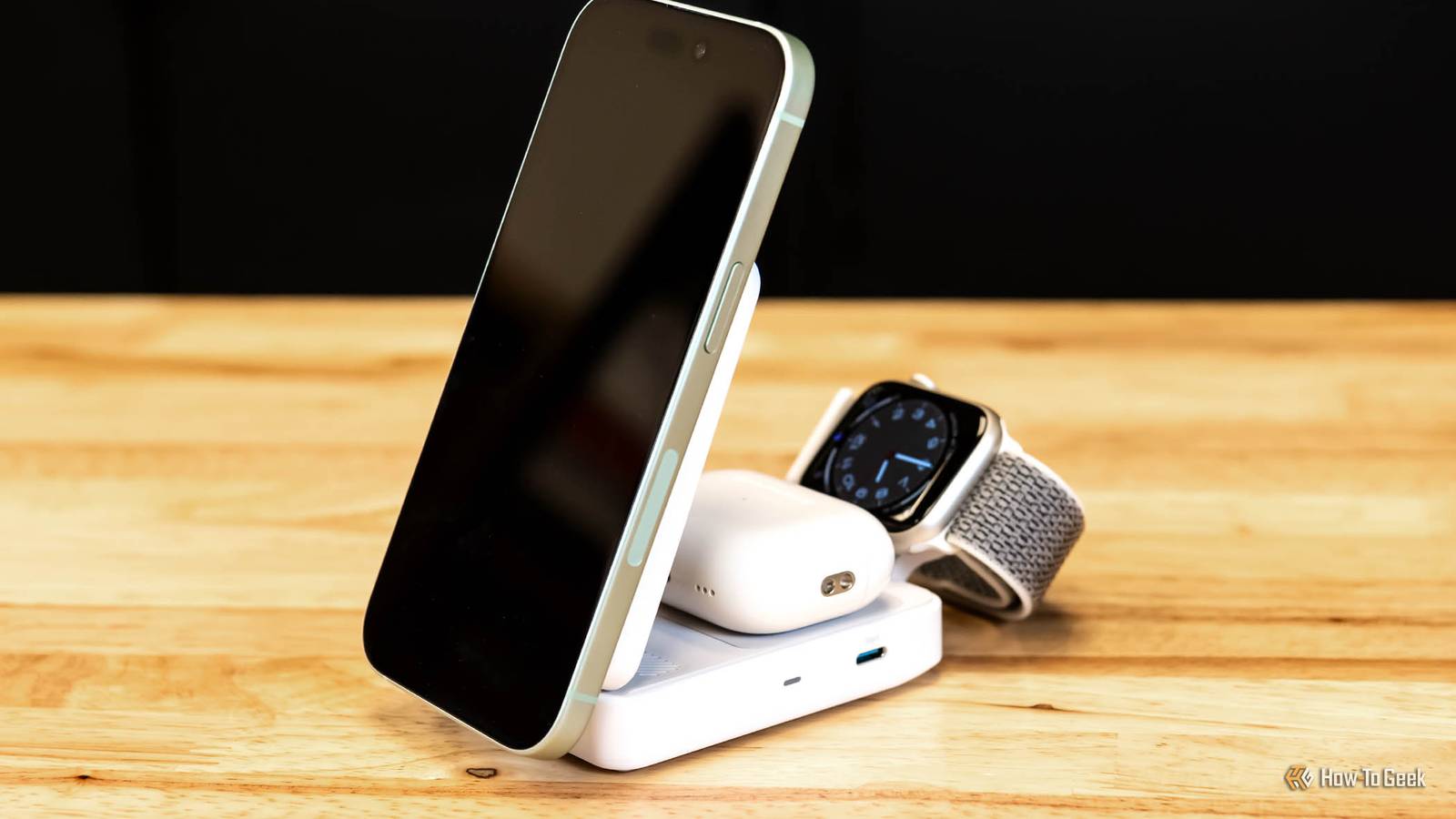
  • Charges iPhone, AirPods, and Watch simultaneously.

Anker Foldable 3-in-1 with ActiveShield 2.0

  • Aluminum body for faster heat dissipation.
  • AI monitors temperature 3 million times/day.
  • Prevents overheating during long charges.

Key Benefit: These docks prevent misalignment and reduce charging time—ideal for heavy users.

Only use MFi-certified accessories to avoid damage.


When to Seek Professional Help

If all else fails, the issue is likely hardware-related.

Signs You Need Service

  • No response after 10+ hours of charging.
  • Battery health below 80% with rapid drain.
  • Visible water damage (red indicator inside).
  • Watch was dropped or exposed to liquid.
  • Brand new watch won’t power on after 7+ hours.

Apple Repair Options

  • Visit an Apple Store or authorized service provider.
  • Under warranty? Free battery replacement if capacity <80%.
  • Out of warranty? Paid replacement only—Apple does not offer standalone battery swaps.

User Frustration: Some owners report being denied repair despite no physical damage—only offered costly replacements.


Special Cases: New or Stored Devices

Unused watches can develop charging issues.

Why New Watches Won’t Power On

  • Devices stored over two years (e.g., old stock) may have permanently degraded batteries.
  • Lithium-ion batteries degrade when stored fully discharged.

Expert Advice: Always store unused electronics at 50% charge in a cool, dry place.

What to Do

  • If a new watch won’t start after 7+ hours, return it.
  • Buy refurbished from Apple’s official store—tested, restored, and covered by warranty.

Avoid third-party “new old stock” unless battery health is verified.


Final Checklist: Quick Fixes Summary

Use this list to troubleshoot fast:

✅ Try the original USB-C magnetic charger
✅ Test a different outlet or computer USB port
✅ Clean watch back and charger with dry cloth
✅ Reposition watch for magnetic click
✅ Remove band for better contact
✅ Force restart (hold Side + Crown 10 sec)
✅ Press screen and back to reseat internals
✅ Leave charging 8–10 hours undisturbed
✅ Fully drain battery, then recharge
✅ Update watchOS or restore via Finder/iTunes
✅ Check Battery Health (<80% = needs service)
✅ Avoid WPT-incompatible chargers
✅ Consider Anker MagGo or MFi-certified dock


Key Takeaways

Symptom Likely Cause Solution
No charging symbol Deep discharge or cable fault Charge 8–10 hrs; test with old cable
Red lightning bolt Critically low battery Wait for red ring; do not interrupt
Works with old cable only Defective USB-C cable Replace under warranty
Warm charger, no charge Dirty contacts or alignment Clean and reposition
Battery below 80% Degraded cell Seek Apple service
New watch won’t turn on Long-term storage drain Return or get refurbished
Software freeze watchOS bug Force restart or restore

If your Apple Watch 7 won’t charge, start simple: clean, reposition, restart. Most issues resolve in minutes. Only after exhausting all steps should you consider professional repair. With the right approach, you can save time, money, and avoid unnecessary replacement.

Keep your charger clean, update regularly, and monitor battery health monthly. A little maintenance goes a long way in keeping your Apple Watch alive and charging fast.

Apple Watch 6 Not Charging? Fix It Fast


Your Apple Watch Series 6 sits motionless on the charger—no green lightning bolt, no response, just silence. You press the Digital Crown or side button, but the screen remains black. If you depend on your watch for heart rate monitoring, sleep tracking, or staying connected, this is more than inconvenient—it’s alarming. But before you assume the worst, know this: an Apple Watch 6 won’t charge is a surprisingly common issue, and in most cases, it’s fixable.

The problem might be as simple as a dirty charging port or a faulty cable. Or it could stem from deeper issues like battery degradation, software glitches, or hardware failure. The good news? There’s a clear, step-by-step path to diagnosing and fixing it. Whether your watch shows a red lightning bolt, gets unusually hot during charging, or refuses to wake up after months in a drawer, this guide delivers proven solutions used by thousands of users and Apple support professionals. You’ll learn how to interpret charging symbols, revive a dead battery, bypass software freezes, and when it’s time to seek repair.


Decode What the Charging Lights Mean

Apple Watch 6 charging light symbols explained

Red Lightning Bolt: Battery Is Fully Drained

When you see a red lightning bolt, your Apple Watch Series 6 has entered Power Reserve mode—its battery is completely empty. It won’t turn on or respond until it receives enough charge. Once placed on the charger, the symbol should change to a red lightning bolt inside a ring, signaling that charging has begun.

If the ring doesn’t appear within 30 minutes, don’t give up. A deeply discharged battery—especially after long storage—can take several hours to show signs of life. Apple recommends leaving it connected for at least 8 hours before concluding it’s not charging.

Pro Tip: Even brand-new watches can arrive in this state after being shipped or stored for weeks. Patience is key.

Green Lightning Bolt: Charging But Possibly Failing

A green lightning bolt means the watch detects the charger and is attempting to charge. But if the device heats up, shuts down, or stops charging after a few minutes, there’s likely an underlying issue—such as battery degradation, a failing charging circuit, or internal damage.

Heat is a major red flag. If your watch becomes warm to the touch, disconnect it immediately. Lithium-ion batteries can overheat dangerously if damaged or improperly connected.

Black Screen: Not Always a Sign of Death

A blank screen doesn’t mean your watch is broken. If the battery is fully drained, it may take 10 to 30 minutes—or even longer—before any visual feedback appears. Apple advises waiting at least 30 minutes on a proper charger before assuming failure.

Avoid constantly plugging and unplugging. Let the watch sit undisturbed to allow the battery to stabilize.


Start with the Charger and Cable

Use Only Apple-Certified Charging Accessories

Third-party cables may look identical but often lack proper magnetic alignment or power regulation. Stick to the Apple Magnetic Charging Cable or USB-C Magnetic Fast Charging Cable. Many “won’t charge” cases vanish after switching from a cheap knockoff to an official Apple charger.

If you’re using a non-Apple cable, replace it immediately. Even slightly misaligned magnets can prevent a secure connection.

Test with a Different Charger and Power Adapter

Faulty hardware is one of the top causes. To pinpoint the issue:

  1. Try a known-working Apple charger.
  2. Test your cable on another Apple Watch.
  3. Plug into a different wall outlet.

This process helps determine whether the problem lies with the watch, cable, or power adapter.

Plug Into a Wall Outlet, Not a Computer

Avoid charging from:
– Laptops (especially in sleep mode)
– USB hubs
– Power banks
– Low-power USB ports

Instead, use a wall outlet with an Apple 5W, 12W, or 20W USB power adapter. For stubborn cases, try an iPad 20W charger—while the Apple Watch doesn’t fast charge, higher-wattage adapters can help initiate power delivery on deeply drained batteries.

Note: Never use damaged or frayed cables. Even minor wear can interrupt charging.


Clean the Charging Contacts Thoroughly

Apple Watch charging port cleaning microfiber cloth

Remove Dirt, Sweat, and Lint Buildup

The metal contacts on the back of the watch and the magnetic surface of the charger are prone to collecting dust, sweat, lotion, and lint. This grime creates a barrier that blocks electrical contact—even if the watch snaps into place magnetically.

To clean safely:
1. Power off the watch if possible.
2. Use a dry, lint-free microfiber cloth or soft-bristled brush.
3. Gently wipe both the watch back and charging puck.

Never use:
– Liquids or cleaning sprays
– Compressed air (can push debris deeper)
– Sharp objects (risk of scratching)

Common Mistake: Users often assume the connection is fine because the watch “sticks” to the charger. But unseen residue can still break the circuit.


Ensure Proper Magnetic Alignment

Snap the Watch Firmly Into Place

The Apple Watch Series 6 relies on precise magnetic alignment. If it’s not seated correctly, charging won’t start.

Steps to ensure proper contact:
– Place the charger on a flat, stable surface.
– Position the watch so it snaps securely into place.
– For 44mm or 45mm models, make sure the charger isn’t tilted.

If using a Magnetic Charging Dock or MagSafe Duo, remove thick or metal bands that might interfere with alignment.

Visual Cue: You should feel a firm magnetic pull. If it feels loose, reposition.


Force Restart to Clear Software Glitches

Hold Side Button + Digital Crown for 10 Seconds

A frozen or unresponsive watch may not charge, even when connected. A force restart can clear temporary software bugs.

Steps:
1. Press and hold the side button and Digital Crown together.
2. Hold for at least 10 seconds.
3. Release when the Apple logo appears.

Wait 2 minutes before placing it back on the charger. Many users report their watch starts charging immediately after this step.

Pro Tip: If the screen flickers or shows a low-battery clock face, let it sit on the charger undisturbed for 1–2 hours.


Update watchOS to Fix Charging Bugs

Apple Watch watchOS software update via iPhone

Install the Latest Software via iPhone

Outdated watchOS versions can cause charging issues. Updates often include fixes for battery and power management.

To update:
1. Open the Watch app on your iPhone.
2. Go to General > Software Update.
3. Download and install any available updates.

The watch must be charging or have over 50% battery during the update. If it won’t charge, complete other fixes first—especially force restart and extended charging.


Leave It on Charger for 8 to 10 Hours

Give a Dead Battery Time to Wake Up

If your Apple Watch 6 shows no signs of life, leave it connected for 8 to 10 hours, even overnight. A deeply discharged battery may take hours to respond.

Real user reports:
– One watch revived after 5 hours.
– Another came back after 4 days with 13% battery.
– A stored unit (unused for 2+ years) failed—indicating permanent battery failure.

Patience is critical. Don’t assume it’s dead after 30 minutes.


Fully Drain and Recharge for Battery Reset

Recalibrate the Charging Cycle

If the watch powers on but won’t charge past a certain point, try a battery reset.

Steps:
1. Let the battery drain completely—until no response when pressing the Crown.
– May take 2–7 days, depending on usage.
2. Once dead, charge continuously for 8–10 hours.
3. The watch may reboot and charge normally.

This resets the battery’s charge cycle and can fix false low-battery readings.

Warning: Avoid doing this frequently—full discharges shorten battery life.


Apply Light Pressure to Reseat Internal Parts

Gently Press Front and Back to Fix Loose Connections

After drops or impacts, internal connectors may loosen. Some users report success by applying light pressure:

  1. Press thumbs gently on the center of the display.
  2. Simultaneously press the back of the watch.
  3. Hold for 5 seconds.
  4. Perform a force restart.

This may reconnect a loose battery or logic board ribbon.

Caution: Use minimal pressure. Never press on the edges.


Try a Higher-Wattage Charger

Use an iPad 20W Adapter for Stubborn Cases

Some deeply drained watches respond better to higher-power sources. Try:

  • Apple 20W USB-C charger
  • iPad power adapter
  • Paired with the Apple USB-C Magnetic Fast Charging Cable

This setup delivers stable initial power that may kickstart a failing battery.

Note: The watch still charges at normal speed—the higher wattage only helps initiate charging.


Check Battery Health and Recognize Failure

View Maximum Capacity in Settings

Battery health degrades over time. To check:

  1. On Apple Watch: Settings > Battery > Battery Health
  2. Look at Maximum Capacity.

If it’s below 80%, the battery is degraded and may need replacement.

Signs of Hardware Failure

  • Watch gets hot during charging
  • No response across multiple chargers and outlets
  • No signs of life after 24 hours

These suggest dead battery or damaged logic board.


When to Contact Apple Support

Seek Help If:

  • Battery health is below 80%
  • Watch overheats while charging
  • No response after 24 hours
  • Device is under warranty or AppleCare+

Apple offers battery service for out-of-warranty watches. For new but unresponsive units, especially stored over 2 years, return to seller—old stock batteries degrade even when unused.

Pro Tip: Consider Apple Refurbished Store—devices come with new batteries and warranty.


Prevent Future Charging Issues

Clean Weekly, Avoid Full Drains, Store at 50%

  • Clean contacts regularly with a dry cloth
  • Charge at 20–30% to extend battery life
  • Store long-term at 50% charge, powered off, and recharge every 6 months

Final Action Plan

  1. Use Apple charger + wall outlet
  2. Clean contacts
  3. Realign on charger
  4. Force restart
  5. Charge 8–10 hours
  6. Try iPad 20W adapter
  7. Update watchOS
  8. Drain and recharge

If nothing works: Contact Apple, visit a store, or consider battery replacement.

Most Apple Watch 6 charging problems are solvable. Start simple, stay patient, and act fast—lithium-ion batteries don’t wait.

Apple Watch 6 Troubleshooting: Quick Fixes


Your Apple Watch Series 6 won’t turn on. The screen is black, unresponsive, and no amount of charging seems to help. Or maybe it’s stuck in a boot loop, failing to update, or not syncing with your iPhone. You’re not alone—thousands of users face similar Apple Watch 6 troubleshooting challenges, from charging failures to frozen displays and LTE connectivity issues.

This guide delivers step-by-step fixes for the most common Apple Watch Series 6 problems, using verified methods from Apple’s official support, user-tested recovery techniques, and real-world repair insights. Whether you’re dealing with a dead battery, software glitches, or the notorious blank screen defect, you’ll find clear, actionable solutions—starting with simple resets and escalating only when necessary. You’ll also learn how to check eligibility for free repairs under Apple’s Blank Screen Service Program, optimize battery life, and avoid costly out-of-warranty replacements.


Restart or Force Restart Your Apple Watch

If your Apple Watch 6 freezes, won’t wake, or gets stuck on the Apple logo, a restart is often the fastest fix.

Perform a Normal Restart

Use this for minor issues like app crashes or sluggish performance:

  1. Press and hold the side button until the Power Off slider appears.
  2. Drag the slider to power off.
  3. Wait 10 seconds, then press and hold the side button again until the Apple logo appears.

This clears temporary software hiccups without affecting your data.

Force Restart When the Watch Is Unresponsive

If the screen is completely black or frozen:

  1. Press and hold both the side button and Digital Crown.
  2. Keep holding for 10 to 15 seconds—up to 60 seconds if the device is fully unresponsive.
  3. Release when the Apple logo appears.

Pro Tip: A force restart doesn’t erase your data. It resets the system memory and stops frozen processes, making it ideal for boot loops or failed updates.


Update or Restore watchOS Successfully

Outdated or corrupted software causes many Apple Watch 6 issues, including update failures, sync problems, and unresponsive apps.

Check for Software Updates

  • On your iPhone: Open the Watch app > General > Software Update.
  • On your Apple Watch: Go to Settings > General > Software Update.

Ensure your watch:
– Is charged to at least 50%.
– Is connected to its charger.
– Is within Bluetooth range of your iPhone.

Note: Apple Watch Series 6 supports up to watchOS 10. Devices on older versions may fail to pair with iPhones running iOS 18 or later.

Fix a Stuck or Failed Update

If the update won’t install:

  1. Restart both your Apple Watch and iPhone.
  2. On iPhone, go to Watch app > General > Storage.
  3. Find and delete the pending watchOS update file.
  4. Retry the update.

This clears corrupted download files that block installation.

Force Update Using a Mac

When the iPhone method fails:

  1. Connect your iPhone to a Mac via USB.
  2. Open Finder and select your Apple Watch in the sidebar.
  3. Click Update or Restore.

This bypasses iPhone-side bugs and connects directly to Apple’s servers for a clean install.

Last Resort: Visit Apple Support

If the watch won’t boot or restore, visit an Apple Store or Apple Authorized Service Provider. Technicians use internal tools to force a system restore—even on non-responsive devices.


Fix Apple Watch 6 That Won’t Turn On

Apple Watch Series 6 unresponsive black screen troubleshooting

A black screen doesn’t always mean permanent failure. Many users revive their Apple Watch 6 with the right steps.

Step-by-Step Recovery Process

Step Action What to Look For
1 Charge for 60 minutes Use the original Apple Magnetic Charger. A deeply drained battery may take time to respond.
2 Force restart while charging Hold side button + Digital Crown for 15 seconds. If the Apple logo appears, the issue is likely software-related.
3 Check for red lightning bolt This indicates charging is detected. Keep charging—some users revived watches after 48 hours.
4 Test with another Apple charger Third-party cables often deliver incorrect voltage. Try a known working cable.
5 Wiggle the charger connection If the screen flickers, the cable may have internal damage. Replace it.

Pro Tip: Avoid letting your battery drop below 20% regularly. Deep discharges can trigger Power Reserve mode or prevent startup.


Solve Charging Problems

Apple Watch Series 6 charging cable not working

No charging icon? Red lightning bolt won’t go away? Here’s how to fix it.

Use Only Apple-Certified Chargers

  • Must use Apple Magnetic Charging Cable or USB-C Fast Charging Cable.
  • Avoid third-party chargers unless WPT-compliant (required in China/Indonesia).
  • Using a country-specific WPT charger on an incompatible model shows:

    “Unable to charge. This is a country-specific charger. It is incompatible with this Apple Watch.”

Clean the Charging Contacts

Dirt, sweat, or plastic wrap can block the connection.

  1. Wipe the back of the watch and charger surface with a soft, lint-free cloth.
  2. Remove debris from the magnetic pins.
  3. Reconnect and charge.

Check for Hardware Damage

  • Inspect the cable for fraying or bent pins.
  • Try a different cable.
  • If charging starts but stops intermittently, the charging module may be failing.

User Report: One Apple Watch Series 6 stopped charging after a beach swim. Apple denied repair, but a local technician replaced the charging module successfully.


Resolve the Blank Screen Issue

Apple acknowledged a known hardware defect causing permanent black screens on some Apple Watch Series 6 units.

Apple’s Free Service Program

  • Eligibility:
  • Serial number must be in the affected range.
  • Device must be within 2 years of purchase.
  • Covered repairs:
  • Free screen replacement at Apple Stores or authorized providers.

Warning: Many users report being denied despite identical symptoms—especially if just outside the 2-year window. Repair quotes can exceed €400.


User-Tested Revival Methods

Even if excluded from the program, try these:

Multi-Step Revival Process

  1. Force restart (side button + crown for 15 seconds).
  2. On iPhone, change the watch face via the Watch app.
  3. Place on charger and force restart again.
  4. Tap the side button 15 times rapidly, then press the Digital Crown.
  5. Rub the front and back firmly with thumbs for 10–12 seconds.
  6. Tap face-down and face-up repeatedly on a soft surface.

Freezer Method (Last Resort)

  1. Place the watch in a sealed plastic bag.
  2. Put it in the freezer for 15–20 minutes.
  3. Remove, wipe dry, and immediately place on charger.

Warning: Risk of condensation damage. Use only after all other methods fail.

Success Story: One user revived a watch after 7 days of inactivity using this method.


Fix Connectivity & Pairing Problems

Red iPhone icon? No notifications? Here’s how to reconnect.

Restore Bluetooth Connection

  1. Bring Apple Watch and iPhone within 3 feet.
  2. On iPhone:
    – Turn off Airplane Mode.
    – Ensure Bluetooth and Wi-Fi are on.
  3. On Apple Watch:
    – Swipe up for Control Center and disable Airplane Mode.
  4. Restart both devices.

Unpair and Re-pair Watch

Resets communication and clears corrupted data.

  1. On iPhone: Open Watch app > All Watches > tap “i” > Unpair Apple Watch.
  2. Confirm—your data is backed up automatically.
  3. Set up as new or restore from backup.

Benefit: Often triggers a forced watchOS update that wasn’t available before.


Fix LTE and Wi-Fi Issues

LTE Not Connecting?

Likely a carrier provisioning error.

  1. On iPhone: Open Watch app > Cellular > tap “i” > Remove Plan.
  2. Tap Add New Plan to re-provision.
  3. Contact your carrier (e.g., AT&T, Verizon) if it still fails—backend reset may be needed.

Wi-Fi Not Working?

  1. On Apple Watch: Settings > Wi-Fi > toggle off/on.
  2. On iPhone: Ensure Wi-Fi settings allow Apple Watch access.
  3. Restart both devices.

Extend Battery Life & Fix Drain

Apple claims 18 hours, but real-world use varies—especially after 2+ years.

Optimize Settings for Longer Life

Action Power Saved
Disable LTE when iPhone is nearby High
Turn off Always-On Display High
Lower screen brightness Medium
Disable Wake on Wrist Raise Medium
Reduce notifications Medium
Enable Low Power Mode (watchOS 10+) High

Low Power Mode disables heart rate, blood oxygen, Always-On Display, and background connectivity.

Use Power Reserve Mode

When battery is critically low:
– Press and hold the side button until Power Reserve appears.
– Watch shows only the time.
– Press side button to wake.

Pro Tip: Manually enter Power Reserve to extend survival during long trips.


Fix Activity & GPS Tracking Errors

Inaccurate Workout Data?

  1. Ensure proper fit: Snug but not tight.
  2. Clean sensors: Wipe the back regularly.
  3. Recalibrate:
    – iPhone: Watch app > Privacy > Reset Calibration Data.
  4. Update Health details:
    Health app > Health Details > confirm height, weight, medications.

GPS Not Tracking?

  • Use Outdoor Walk/Run—indoor workouts don’t use GPS.
  • On iPhone: Settings > Privacy & Security > Location Services > Apple Watch Workout > While Using + Precise Location.

Fix Missing Notifications

Why Notifications Don’t Appear

  • Apple Watch is locked.
  • Do Not Disturb or Focus Mode is active.
  • App-specific alerts are disabled.

Fixes

  1. Ensure Wrist Detection and Unlock with iPhone are on (Watch app > Passcode).
  2. Swipe up for Control Center—look for moon (Do Not Disturb) or Focus icon.
  3. In Watch app > Notifications, confirm apps are allowed to notify.

Fix “Notify When Left Behind” Grayed Out

This useful Find My feature sometimes doesn’t activate.

How to Enable It

  1. Update iOS and watchOS to latest versions.
  2. Restart both devices.
  3. In Find My app, toggle Notify Left Behind off/on.
  4. Confirm both devices use the same Apple ID.
  5. On iPhone: Settings > Privacy & Security > Location Services > enable Apple Watch Find… services with Precise Location.

Handle Overheating & Skin Irritation

Apple Watch Series 6 overheating symptoms

Overheating?

  • Symptoms: Watch shuts down, feels hot to touch.
  • Action:
  • Remove immediately.
  • Do not charge—it may worsen the issue.
  • Let battery drain naturally.
  • Likely hardware fault—visit Apple Store.

Skin Irritation?

Caused by sweat, tight bands, or material sensitivity.

Solutions

  • Loosen the band slightly.
  • Take breaks—remove watch daily.
  • Switch to breathable band (nylon, leather, metal).
  • Avoid wearing during intense workouts or sleep.

Clean Gunked-Up Buttons

Digital Crown or side button unresponsive? Clean it.

Step-by-Step Cleaning

  1. Power off the Apple Watch.
  2. Remove the band.
  3. Dip a Q-tip in isopropyl alcohol.
  4. Gently clean around the Digital Crown and side button.
  5. Use dry end to wipe residue.
  6. Let dry before turning on.

Why alcohol? More effective than water for sticky buildup or salt residue.


When to Seek Repair or Replacement

If nothing works, it’s time to escalate.

Contact Apple Support

Prepare:
– Serial number (found in Watch app > General > About).
– Purchase date and proof of purchase.
– Backup via iPhone (automatic during unpairing).

Possible Outcomes:
– Remote diagnostics.
– Eligibility check for Blank Screen Service Program.
– In-store repair appointment.

Repair Costs

  • Out-of-warranty repairs: €400–€500 or £400+.
  • Users report frustration paying high fees for known hardware defects.

Third-Party Repair Options

Some local shops offer:
Battery replacement
Charging module repair
Button fixes

Risks:
– Loss of water resistance.
– No Apple warranty.
Activation Lock may persist if not removed.


Final Checklist: Apple Watch 6 Troubleshooting Flow

“`text
1. Watch won’t turn on?
→ Charge 60+ minutes with Apple charger.
→ Force restart (10–15 sec side + crown).
→ Try extended charge (up to 48 hours).
→ Attempt freezer method (last resort).

  1. Still dead?
    → Check Blank Screen Service Program eligibility.
    → If denied, consider third-party repair.

  2. Software or sync issues?
    → Update via iPhone or Mac.
    → Unpair and re-pair.
    → Reset or restore.

  3. Battery or performance problems?
    → Optimize settings.
    → Enable Low Power Mode.
    → Seek service if overheating or swelling.
    “`

Final Note: Many Apple Watch Series 6 issues are software-related and fixable with a restart or update. For hardware failures like blank screens, act fast—check Apple’s service program before your warranty expires. Keep your watch updated, clean, and charged above 20%, and you’ll avoid most common problems. When in doubt, unpair and re-pair—it’s often the key to unlocking a stubborn device.

Fix Apple Watch 6 Side Button Not Working


If your Apple Watch Series 6 side button isn’t responding, you’re facing one of the most frustrating hardware issues affecting daily use. That small button on the right edge powers on your watch, activates Apple Pay with a double press, opens the app Dock, and triggers Emergency SOS when held. When it stops working—whether unresponsive, stuck, or acting erratically—core functionality collapses. The good news? Most failures aren’t permanent. In fact, many cases stem from trapped moisture, debris buildup, or temporary software glitches—not internal damage. With the right troubleshooting, you can often restore full function without tools or expensive repairs. This guide walks you through proven fixes, from quick software resets to professional repair options, so you can diagnose the cause and get your Apple Watch back to normal.

Try These Quick Fixes Immediately

Before diving into cleaning or repairs, rule out simple software or power issues. These steps take under five minutes and resolve many cases.

Force Restart to Reset Input Detection

Hold down both the Side Button and Digital Crown for 10 to 20 seconds until the Apple logo appears. Even if the side button feels dead, a sustained press may still register during a forced restart. This clears temporary system errors that can block button input. Once rebooted, test all functions: single press (power), double press (Apple Pay), and long press (Emergency SOS). If the button now works, a software glitch was likely the cause.

Note: A successful restart doesn’t fix hardware damage, but it confirms the watch is operational.

Activate Water Eject Mode to Clear Internal Moisture

If water is lodged near the button, it can create a short circuit. Use the built-in Water Lock feature to vibrate it out:
1. Swipe up from the watch face to open Control Center.
2. Tap the water droplet icon to enable Water Lock.
3. Turn the Digital Crown until you hear a chime and see water eject.

The vibration helps dislodge moisture from internal components. Test the button immediately—some users report instant recovery after this step.

Charge for a Full Hour to Rule Out Battery Failure

A completely drained battery can mimic button failure. Place your Apple Watch on its charger for 60 minutes, even if the screen remains black. A powered-off watch should turn on automatically when charging. If it boots up, the issue may have been low power, not the button.

Pro tip: Check your iPhone’s Bluetooth settings—seeing your Apple Watch listed means it’s on, even if the display is unresponsive.

Clean Around the Side Button to Remove Debris

Apple Watch 6 side button cleaning tools lint removal

Sweat, soap, dust, or mineral deposits can jam the button’s movement or block electrical contact. Since the Apple Watch Series 6 is WR50-rated (water-resistant to 50 meters), safe cleaning methods are possible.

Rinse Gently Under Warm Tap Water

Turn on Water Lock, then hold the watch under warm (not hot) running water for 6–8 seconds, focusing on the side button area. The water dissolves sticky residues and flushes out particles. Dry thoroughly with a soft, lint-free cloth. Many users report the button working again within seconds.

Warning: Avoid high-pressure water (like showers or hoses), which can force moisture past seals.

Clean with Isopropyl Alcohol and a Soft Brush

For stubborn grime:
1. Dampen a cotton swab or soft toothbrush with 90%+ isopropyl alcohol.
2. Gently scrub around the edge of the button.
3. Let it air dry for 10–15 minutes.

Alcohol evaporates quickly, disinfects, and dissolves oils and corrosion. One user fixed a stuck button using this method combined with a paper cutter to lift debris.

Avoid: Getting liquid into speaker or microphone openings.

Use a Paper Blade to Dislodge Lint or Buildup

Insert a thin, dry piece of paper or plastic (like a credit card edge) around the button gap. Gently wiggle to break up lint or dried sweat. Do not force it—scratches or internal damage can occur. This method works best when debris is visible or the button feels physically stuck.

Dry Out Trapped Moisture Completely

If your watch was exposed to water—especially from swimming, showers, or sweat—internal moisture may be shorting the button circuit. Time and proper drying are critical.

Use Silica Gel, Not Rice, for Effective Drying

Despite popular belief, rice is ineffective at absorbing internal moisture and can leave dust behind. Instead:
– Place the watch in an airtight container with silica gel packets.
– Leave for 24 to 72 hours.
– Ensure airflow—don’t bury the device.

Silica gel is far more efficient than rice. One user reported full recovery after five days using silica gel and dry storage.

Pro tip: Recharge silica gel in the oven at 200°F for reuse.

Air Dry in a Warm, Ventilated Area

Set the watch on a towel in a dry room with good airflow. Avoid direct sunlight or heat sources. Recovery can take several days as trapped moisture slowly evaporates. One user found their stuck button issue resolved only after returning to a low-humidity environment.

Do not use a hair dryer on heat—it can warp adhesives or damage the display. If needed, use cool air only from a distance.

Never Charge a Wet Watch

Charging while moisture is present risks short circuits. Wait at least 48 hours after water exposure before attempting to charge. If the watch won’t turn on, let it dry completely first.

Exception: If the battery is dead, charging may be necessary—but dry first if possible.

Diagnose the Real Cause Based on Symptoms

Apple Watch 6 side button troubleshooting flowchart symptoms

The specific behavior of your side button reveals whether the issue is software, debris, or hardware failure.

Button Clicks but No Response

You feel the mechanical press, but nothing happens. This suggests:
– Internal electrical failure
– Damaged flex cable
– Corrosion on contact points

Software resets won’t help if the signal isn’t reaching the logic board.

Button Acts Stuck or Permanently Pressed

The watch behaves as if the button is held down:
– Triggers Emergency SOS
– Causes boot loops
– Prevents normal use

This is often due to water bridging the circuit or debris holding the button down. Drying and cleaning are critical first steps.

Only Partial Functionality Works

Example: The button turns the watch on but won’t open Apple Pay or access the Dock. This could indicate:
– Wear on the internal switch
– Software misconfiguration (rare)
– Incomplete physical movement

Test all functions: single press (power), double press (Apple Pay), and long press (SOS).

Random or Erratic Activation

The watch reboots spontaneously or SOS activates without input. Likely causes:
– Intermittent short from moisture
– Failing flex cable
– Button assembly degradation

If this happens during or after water exposure, drying is the priority.

When Hardware Repair Is Required

If cleaning and drying fail, the issue is likely hardware-related. The most common fault is the side button flex cable, which also carries the microphone signal.

Replace the Flex Cable to Restore Function

The side button connects via a thin ribbon cable to the logic board. This cable can:
– Tear from repeated flexing
– Corrode from moisture
– Lose contact due to poor seating

Replacement fixes both button and mic issues. You’ll need:
Tri-wing 0.8mm screwdriver
Plastic pry tools
Tweezers
B7000 adhesive
Replacement gasket

Warning: This repair voids water resistance unless done perfectly.

Step-by-Step DIY Repair Overview

  1. Power off the watch.
  2. Heat the display edges with a hair dryer to soften adhesive.
  3. Lift the display using a plastic tool—start near the Digital Crown.
  4. Disconnect display cables by lifting the retaining flaps.
  5. Remove the battery using isopropyl alcohol to dissolve glue.
  6. Access the side button assembly and inspect the flex cable.
  7. Replace the cable if torn, frayed, or corroded.
  8. Test button function before reassembling.
  9. Reattach battery with fresh adhesive.
  10. Replace gasket and reseal with B7000 glue.
  11. Reconnect display and reattach carefully.
  12. Let glue cure: 45 minutes surface dry, 24 hours full bond.

Pro tip: Test the button after reconnection but before sealing—saves time if it fails.

Risks of DIY Repair

  • Screen damage: Glass can crack during removal.
  • Loss of water resistance: Improper sealing invites future moisture.
  • Component damage: Ribbon cables are fragile.
  • Voided warranty: Apple won’t service third-party repaired units.

Only attempt this if you’re experienced with micro-repairs.

Seek Professional Help for Reliable Results

For most users, professional repair is safer and more reliable.

Visit Apple Support or Genius Bar

Apple can:
– Diagnose hardware vs. software issues
– Replace the side button assembly
– Restore water resistance with OEM parts

Visit support.apple.com/repair to schedule a Genius Bar appointment. Bring your proof of purchase if under warranty.

User note: Apple may push software fixes first, even for clear hardware issues. Be firm about symptoms.

Consider Third-Party Repair Shops

Some independent shops offer:
– Lower-cost flex cable replacements
– Water resistance restoration
– Quick turnaround

Choose a shop with Apple Watch experience and read reviews. Avoid those using low-quality parts.

Caution: Apple may refuse service on third-party repaired watches in the future.

Prevent Future Side Button Failures

Avoid repeating the problem with these best practices.

Avoid High-Pressure Water

Don’t wear your Apple Watch in:
– Showers (high-pressure spray)
– Hot tubs (heat degrades seals)
– Water slides or jet skiing

Even though it’s water-resistant, pressure forces water past seals.

Rinse After Swimming

After pool or ocean use:
– Rinse gently with fresh water.
– Dry with a soft cloth.
– Avoid chlorine or salt buildup.

Saltwater is especially corrosive—rinse immediately.

Disable SOS If Button Is Stuck

To prevent accidental emergency calls:
1. Open Settings on the watch.
2. Go to Emergency SOS.
3. Turn off Hold to Auto Call.

This stops SOS from triggering during long presses.

Never Charge a Wet Watch

Moisture + electricity = risk of short. Always dry the device and charging port before connecting.

Replace Gaskets After Repair

If you open the watch, use a new adhesive gasket to maintain water resistance. Generic glue won’t seal as well as OEM materials.


Final Note: Most Apple Watch Series 6 side button issues stem from moisture or debris—not permanent hardware failure. Start with cleaning and drying. Many users report full recovery after 3–5 days of dry storage. If that fails, consider flex cable replacement or professional repair. With patience and the right steps, your side button can work like new again.

Apple Watch 3 Not Charging? Fix It Fast


Your Apple Watch Series 3 won’t charge. No light, no logo, no response—just a blank screen. You place it on the charger, wait 30 minutes, and still nothing. Or maybe a red lightning bolt flashes, but the watch never powers on. You’re not alone. Thousands of users face this issue, especially as the Series 3—released in 2017—ages past its prime. But most charging problems aren’t terminal. Whether it’s dirty contacts, a software glitch, or a failing battery, your Apple Watch 3 can likely be revived with the right steps.

This guide walks you through every proven fix, from simple troubleshooting to advanced resets. You’ll learn how to diagnose the real cause, revive a dead battery, bypass software bugs, and know when it’s time for professional help. Let’s get your Apple Watch charging again.

Check Charging Indicator Lights

Red Lightning Bolt Meaning

A red lightning bolt means your Apple Watch is in Power Reserve mode—the battery is critically low but not dead. It can’t power on, but it may still charge. Place it on the charger. If charging begins, the symbol changes to a red lightning bolt inside a ring. Wait 10–30 minutes. The Apple logo should appear. If it doesn’t, the problem may be deeper than a low battery.

No Lights When Charging

If the screen stays black and no symbol appears:
– Press the side button to wake the display.
– Wait 30+ minutes—a completely drained battery may take time to respond.
– Try a different Apple-certified charger or wall outlet.
– If still no reaction, proceed to cleaning or a force restart.

Missing Green or Yellow Lightning Bolt

Green or yellow means active charging. If you never see either, the connection isn’t completing. This usually points to dirty contacts, misalignment, or a faulty cable. Test with a known-good charger to rule out accessory failure.

Verify Charger and Power Source

Apple Watch charger types comparison Apple Magnetic Charging Cable USB-C Fast Charging Cable

Use Apple-Certified Charging Cables

Stick to Apple Magnetic Charging Cable, USB-C Fast Charging Cable, or Magnetic Charging Dock. Even MFi-certified third-party cables vary in quality. For reliable results, use Apple-branded chargers or top-tier options like Anker MagGo.

Test Different Outlets and Adapters

Plug the USB adapter into a wall outlet, not a computer or USB hub. Some ports don’t deliver enough power. Use an iPhone charger (12W or higher) and avoid extension cords or surge protectors that limit output.

Inspect for Physical Damage

Check the charging puck for bent pins, frayed wires, or corrosion. Examine the back of the watch for grime or moisture. If the cable feels loose or wobbly, replace it—damaged cables cause inconsistent charging.

Clean Charging Contacts Properly

Apple Watch charging contact cleaning lint-free cloth distilled water

Wipe Watch and Charger with Lint-Free Cloth

Sweat, dirt, and lotion build up on the charging coil (back of watch) and metal contacts on the charger. Use a soft, lint-free cloth to gently clean both. Never use alcohol or household cleaners—they can damage protective coatings.

Use Distilled Water for Stubborn Residue

For stuck-on grime, lightly dampen the cloth with distilled water. Wipe the contacts, then dry thoroughly before charging. This simple fix resolves many “no charge” cases.

Avoid Metal Bands During Charging

Metal watch bands can interfere with magnetic alignment and conductivity. Remove the band or switch to silicone when charging. Some users report immediate success after removing metal links.

Reposition for Magnetic Alignment

Align Magnets Correctly

Place the watch so the magnets snap into place. The charging symbol should appear within seconds. If not, rotate the watch slightly or press it forward on the dock. Misalignment is a leading cause of failed charging.

Lay Charging Stand Flat

If using a MagSafe Duo or stand, place it flat on a surface. Angled positions weaken the magnetic connection. Ensure your charger supports 38mm or 42mm models.

Try a Different Charging Position

Some users find success by placing the watch on its side or adjusting the angle. If one position works, it confirms a connection issue—not battery failure.

Force Restart a Dead Apple Watch

How to Force Restart

Even if the screen is black, press and hold both the side button and Digital Crown for 10 seconds. Release when the Apple logo appears. This resets the processor and can clear software glitches that block charging.

Why It Works

A force restart resets the power management system. Many users report the watch suddenly charging after this step—especially after watchOS updates. Wait 2–5 minutes after restarting before placing it on the charger.

Perform a Deep Charge Cycle

Fully Drain the Battery

If software or battery calibration is off, do a complete drain:
1. Let the watch sit until it shows no response to button presses.
2. Speed up draining with 3–5 force restarts per day.
3. Once fully dead, connect to charger and leave for 8–10 hours.

Pro Tip: One user reported success after 3 days of draining—the watch showed a green lightning bolt and booted normally.

Leave It Charging Overnight

Don’t unplug or check progress. A deep charge lets the system recalibrate. If the watch powers on afterward, the issue was likely battery miscalibration or software conflict.

Update or Reset watchOS

Check for Software Updates

Open the Watch app on your iPhone. Go to General > Software Update. Install any available updates. Apple Watch Series 3 supports up to watchOS 8.5.3—no newer versions.

Warning: Some users report charging issues began immediately after watchOS 5.2. Apple never released a fix, and you cannot downgrade.

Unpair and Re-pair the Watch

Corrupted backups can cause charging loops. Fix it:
1. Open Watch app > My Watch > All Watches.
2. Tap your watch and select Unpair Apple Watch.
3. Back up data when prompted.
4. Set up as a new device—don’t restore from backup yet.
5. Test charging.

User Confirmed: One user’s issue returned only when restoring from an old backup. A clean setup fixed it.

Diagnose Battery Health Issues

Apple Watch battery health check settings screenshot capacity

Check Maximum Capacity

On your Apple Watch:
– Go to Settings > Battery > Battery Health.
– View Maximum Capacity.

If it’s below 80%, the battery is degraded. Apple recommends replacement at this point. Note: Battery Health requires watchOS 6.2 or later.

Signs of Failing Battery

  • Dies within hours of charging.
  • Shuts down at 20–30%.
  • Won’t charge past 80%.
  • Needs multiple daily charges.

Expert Insight: After 3–5 years, lithium-ion batteries degrade. Series 3 users are now in this window.

Storage-Related Battery Failure

Even “new” or refurbished units can have dead batteries if stored uncharged for months. One user reported a Series 6 out of the box wouldn’t charge—likely due to long-term storage.

Try the Pressure Re-Seat Method

Press on Display and Back

Loose internal connectors can stop charging. Try this:
1. Remove the watch from the band.
2. Press thumbs firmly into the center of the display for 3–5 seconds.
3. Flip and press the back, near the charging coil.
4. Recharge and force restart.

This may reseat flex cables or battery connections loosened by heat or drops.

When to Use This Fix

Best for watches that:
– Were dropped or exposed to temperature swings.
– Worked after a restart but stopped again.
– Show intermittent charging signs.

Avoid the Freezer Method (High Risk)

Why Users Try It

Some report temporary success by placing the watch in a sealed bag in the freezer for 20 minutes, then warming it up. Cold may contract components and restore contact.

Risks Outweigh Benefits

  • Condensation can short internal circuits.
  • No official support from Apple.
  • May cause permanent damage.

Strong Advice: Skip this. It’s not worth risking your device.

When to Seek Professional Repair

Signs of Hardware Failure

Seek help if:
– No response after 10+ hours on charger.
– Battery health is below 80%.
– Charging starts but cuts off repeatedly.
– Case is swollen or back is cracked.

These point to internal failure—not user-fixable.

Apple Battery Replacement Options

Apple offers out-of-warranty battery service for a fee. They may:
– Replace just the battery.
– Offer a paid replacement instead (common for older models).

User Report: One Apple Watch Series 7 owner was offered only a full replacement—no battery swap.

Visit an Authorized Service Provider

Third-party Apple-certified shops can replace batteries. But Apple restricts parts for older models. Call ahead to confirm availability for Series 3.

Consider Upgrading

Apple Watch Series 3 is discontinued (2018). No software updates beyond watchOS 8.5.3. If repairs fail, consider upgrading to:
Apple Watch SE (best value)
Series 8 or 9 (latest features)
Apple Watch Ultra (rugged, long battery)

Refurbished models from Apple come with warranty and full service history.

Frequently Asked Questions

Why is there a red lightning bolt but no charge?

The red lightning bolt means battery is too low to power on. It’s not charging yet. Wait. If the symbol doesn’t change to a red bolt in a ring, the connection is failing—clean contacts or try a new charger.

Does force restart work on a dead watch?

Yes. Even if the screen is black, hold side button + Digital Crown for 10 seconds. If the Apple logo appears, the watch is alive. Charge it immediately.

Can watchOS 5.2 break charging?

Yes. Multiple users report charging stops after 1 minute post-update. Apple never released a fix. Unpairing and setting up as new may help—but you can’t downgrade.

How long should an Apple Watch battery last?

Typical lifespan: 3–5 years with daily charging. After 5 years, capacity often drops below 80%. Series 3 users are now at or past this point.

What if the Watch app disappeared from my iPhone?

This can happen with pairing issues. Try:
– Restarting iPhone.
– Reinstalling Watch app from App Store.
– Unpairing and re-pairing the watch.

Can I replace the battery myself?

Not safely. The battery is glued in. DIY kits risk damaging the display or water seals. Apple uses proprietary tools. Professional service is recommended.

Is the Apple Watch 3 still supported?

No new software updates. watchOS 8.5.3 is the final version. Apple still offers battery service, but parts may be limited. Long-term, expect reduced support.

Apple Original Chargers

  • Magnetic Charging Cable – Reliable, included with original purchase.
  • Magnetic Charging Dock – Better alignment, stands upright.
  • USB-C Fast Charging Cable – Faster charge, sold separately.
  • MagSafe Duo Charger – Use only if compatible with 38mm/42mm.

Top Third-Party Options (MFi-Certified)

Anker MagGo 3-in-1 Dock Stand

  • Charges Apple Watch, iPhone, AirPods.
  • 15W fast charging.
  • Adjustable angles.
  • Full charge in 1 hour 13 minutes.

Anker MagGo Foldable 3-in-1 Pad

  • Compact, travel-friendly.
  • Works with metal bands.
  • Folds flat.

Anker MagGo with ActiveShield 2.0

  • Aluminum body for cooling.
  • AI temperature control.
  • Optimizes power delivery.

Pro Tip: Always use Apple-certified cables with third-party stands.


Final Note: The Apple Watch Series 3 not charging issue is common but rarely hopeless. Start with cleaning, force restart, and charger checks. Move to deep charge and unpairing if needed. If battery health is poor, seek professional replacement. Given its age, consider upgrading for long-term reliability. With the right steps, most watches can be revived—no replacement required.

« Older posts Newer posts »

© 2026 Apple Watch Reviews

Theme by Anders NorenUp ↑